Rummynose Tetra
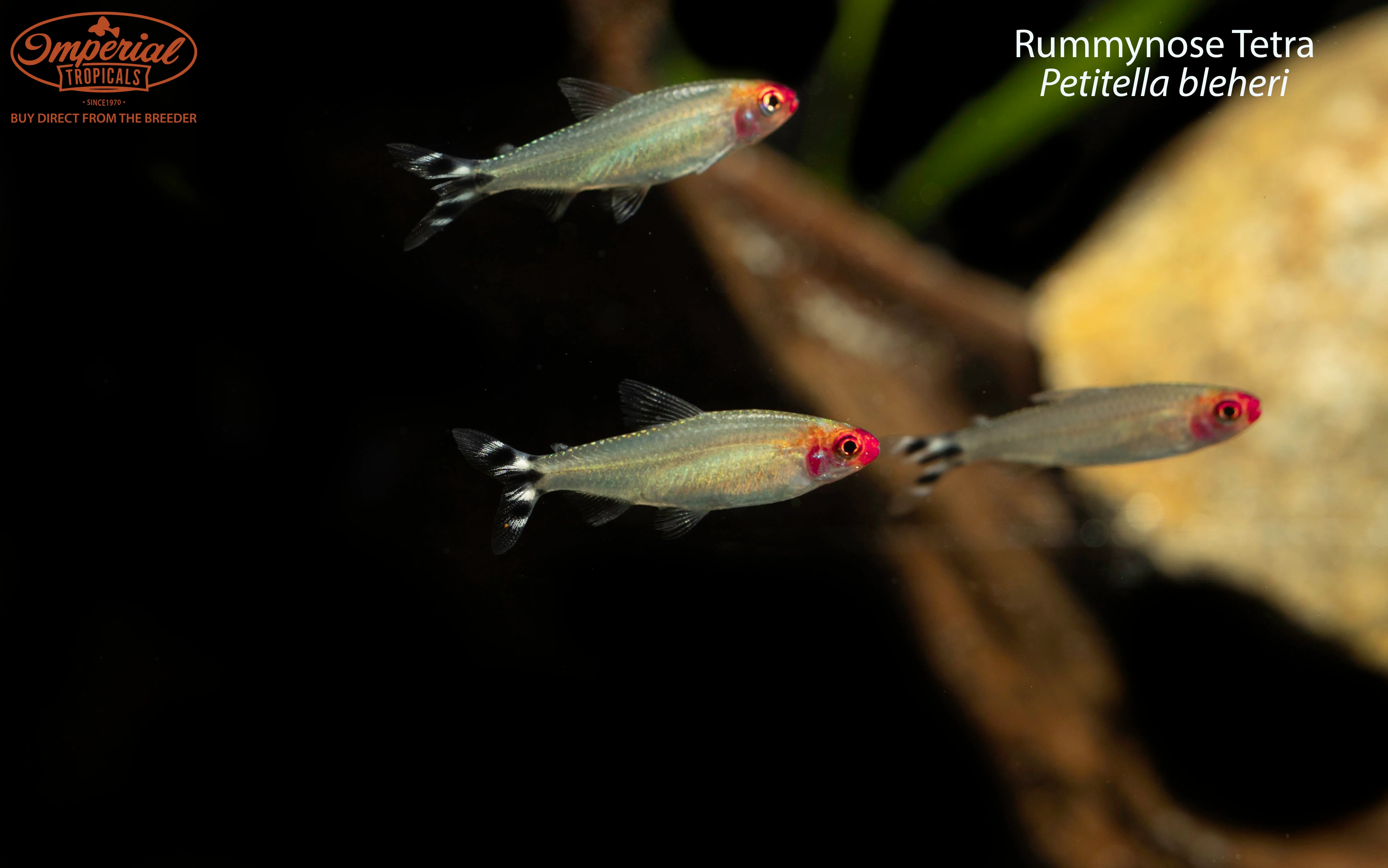
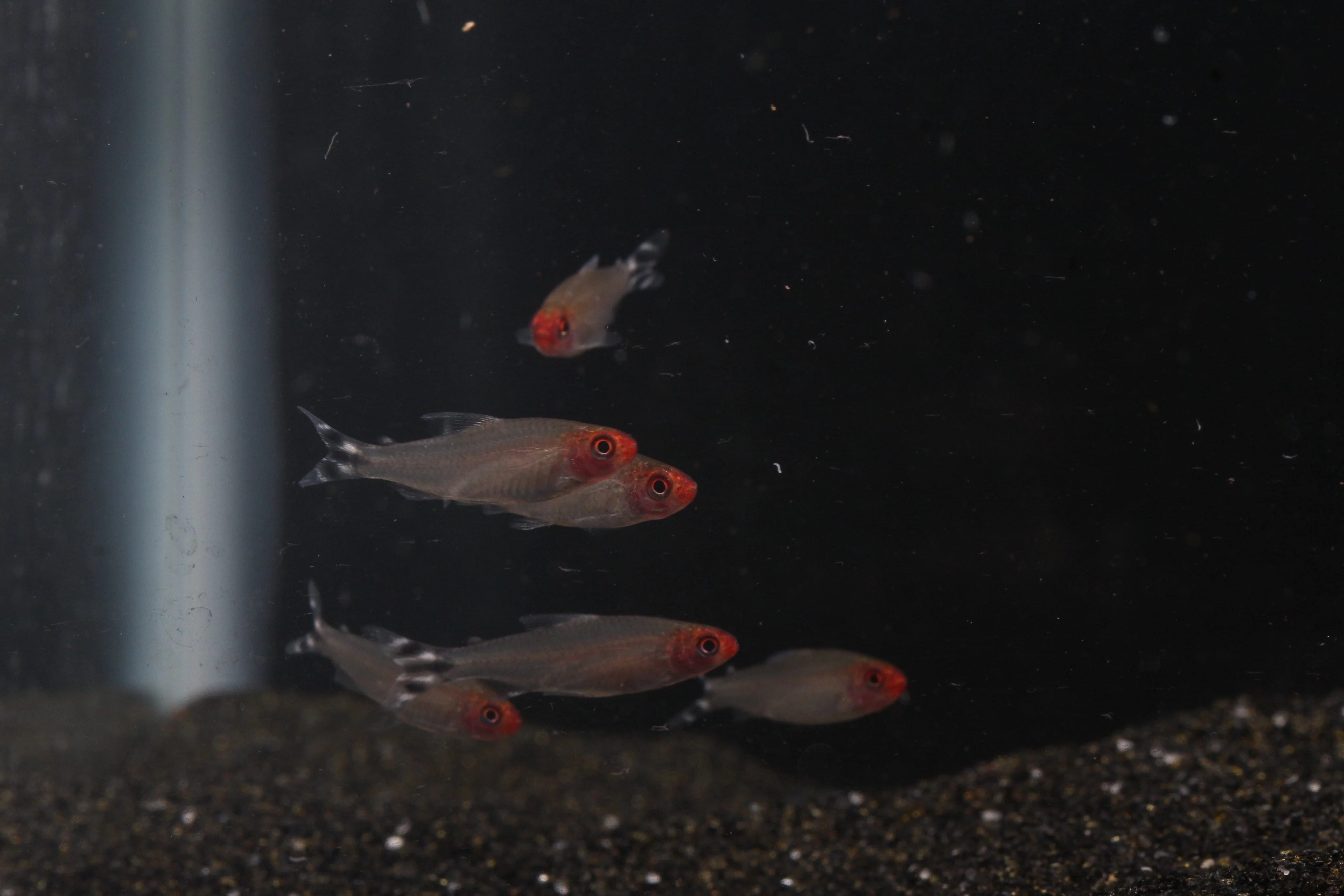
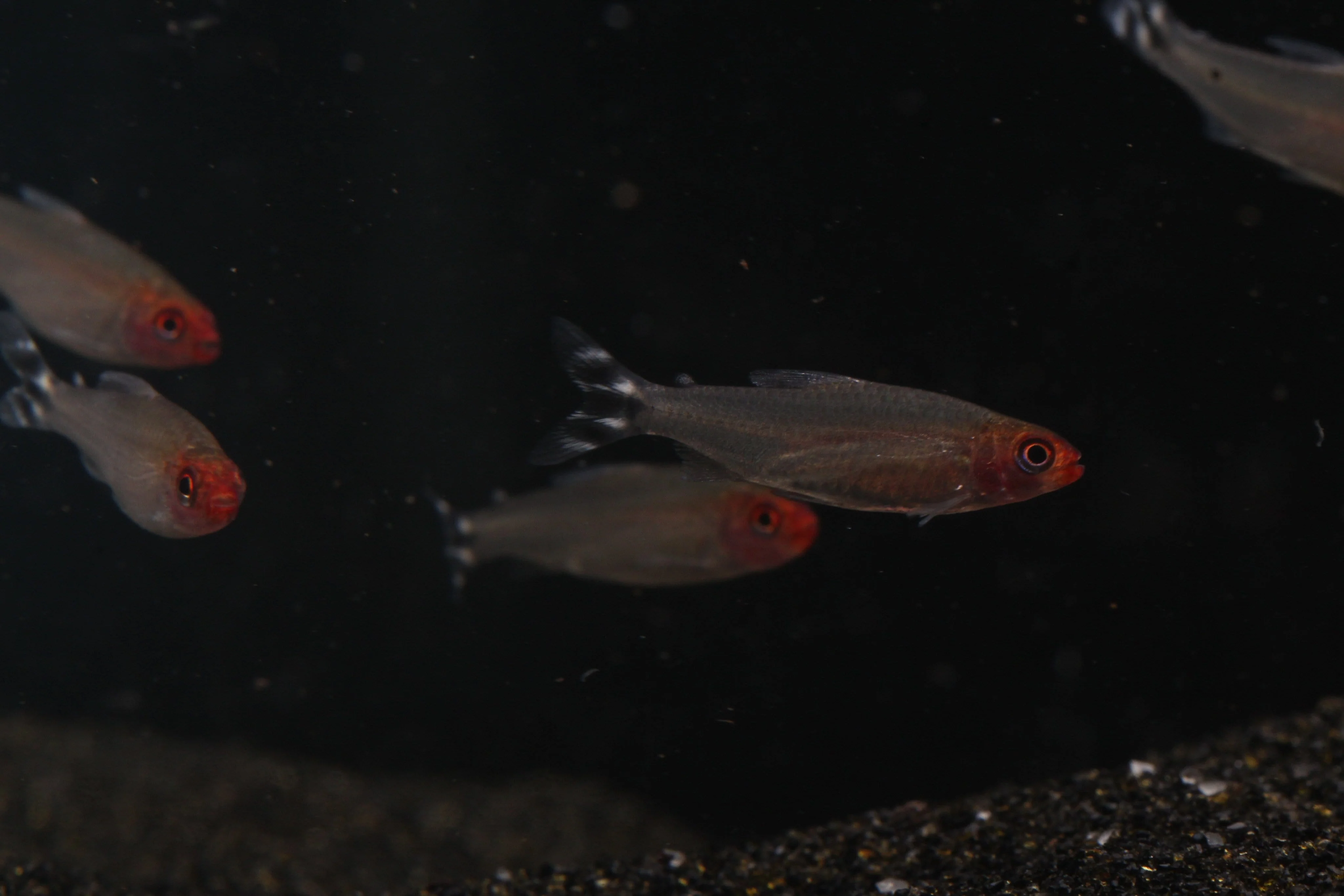
Remarks: This particular rummynose tetra was formerly classified as Hemigrammus bleheri, but recent analysis resulted in them being reclassified as Petitella bleheri. All three species of rummynose tetras sport bright red faces and a flagtail pattern on their caudal fin, but this particular species shows the most red on the face with the color extending past the gill plate. This has made them the most desirable of the three species and is the one most commonly bred in captivity. In the wild, this coloration helps with predation as their red heads blend into the reddish-brown water so a predator is more like to go for their tails instead. A bite to the tail is far less serious than a bite to the head!
Rummynose tetras are native to blackwater habitats in the Rio Negro and Rio Meta within both Columbia and Brazil. These waters are very warm, soft, acidic, calm, and full of botanicals. For the rummynose tetra to thrive in the aquarium, these parameters should be replicated. Notably, the conditions preferred by these colorful little tetras are similar to that of discus so many fish keepers like keeping the two species together. The presence of the rummynose tetra actually can be very helpful for those looking to keep discus as the rummynose tetra is essentially a living water quality indicator! This is because stress will cause the red color on their face to wash out. If your rummynose tetra does not have a completely red head and is not sick, has not recently been moved, is being kept with a large enough school, and is not with aggressive tankmates, then the water parameters are almost certainly the issue. Incorrect pH, water hardness, temperature, ammonia, nitrite, and nitrate levels can all be factors that cause the rummynose tetra to turn pale. If you see this loss of color, you should perform water tests to determine which parameter is off.
The rummynose tetra is a very tight shoaling fish that can be found travelling in groups of thousands in the wild. This means these little tetras should be kept in as large of groups as possible within the aquarium with there being no less than 10 fish in a group. Not keeping them in the correct numbers can result in the fish feeling unsafe and becoming extremely stressed. The more you have, the more brave they will be and the more likely you will be able to witness courting and harmless sparring behavior. Providing plenty of cover in the form of driftwood and aquatic plants will also help in encouraging the rummynose tetra to not hide. Tankmates that are aggressive or large enough to swallow them should be avoided as like many small tetras, the rummynose tetra does not have any true means of defense. Otherwise, these colorful and useful little tetras make an excellent addition to almost any peaceful, soft water community tank.
Original: $9.99
-65%$9.99
$3.50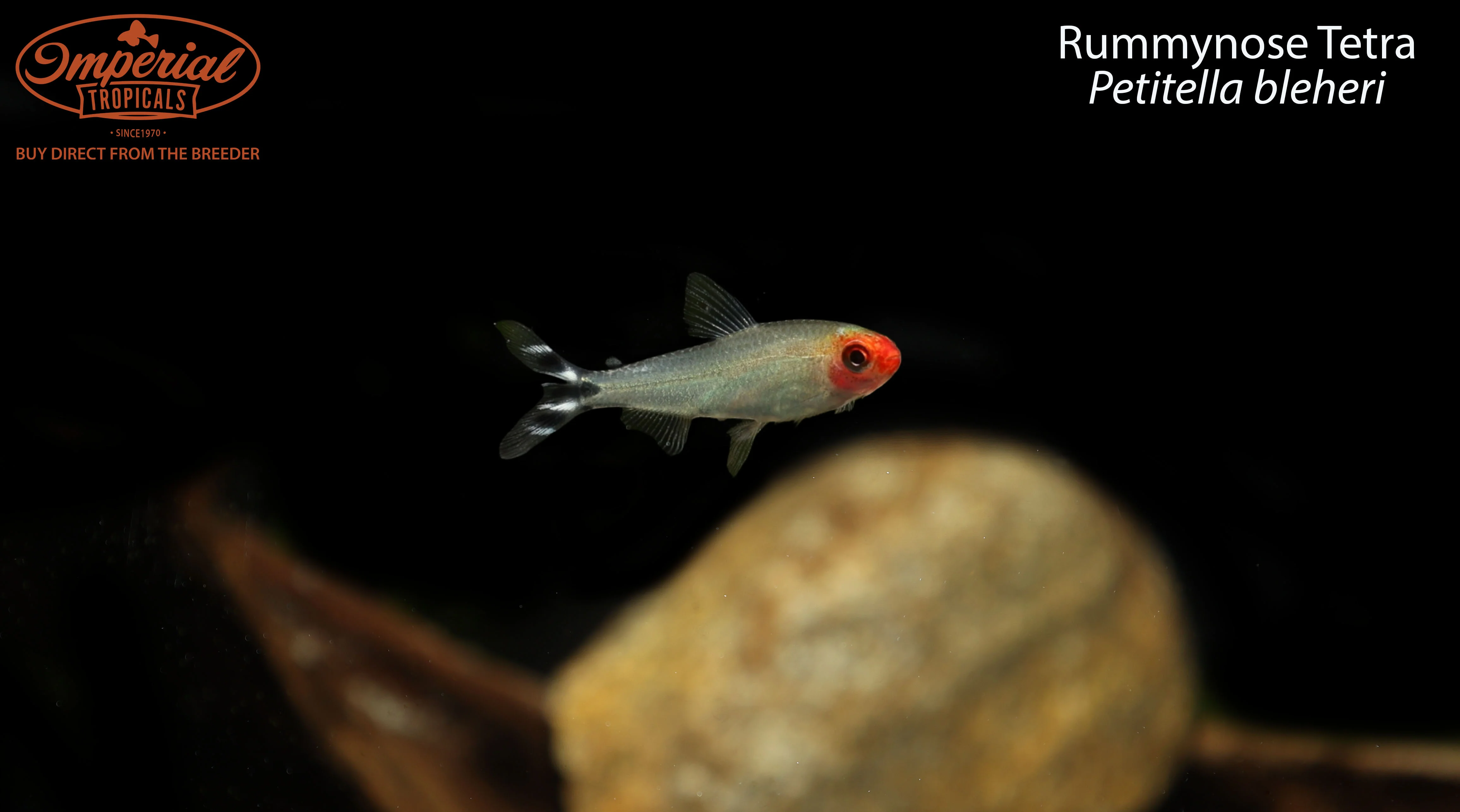
Description
Remarks: This particular rummynose tetra was formerly classified as Hemigrammus bleheri, but recent analysis resulted in them being reclassified as Petitella bleheri. All three species of rummynose tetras sport bright red faces and a flagtail pattern on their caudal fin, but this particular species shows the most red on the face with the color extending past the gill plate. This has made them the most desirable of the three species and is the one most commonly bred in captivity. In the wild, this coloration helps with predation as their red heads blend into the reddish-brown water so a predator is more like to go for their tails instead. A bite to the tail is far less serious than a bite to the head!
Rummynose tetras are native to blackwater habitats in the Rio Negro and Rio Meta within both Columbia and Brazil. These waters are very warm, soft, acidic, calm, and full of botanicals. For the rummynose tetra to thrive in the aquarium, these parameters should be replicated. Notably, the conditions preferred by these colorful little tetras are similar to that of discus so many fish keepers like keeping the two species together. The presence of the rummynose tetra actually can be very helpful for those looking to keep discus as the rummynose tetra is essentially a living water quality indicator! This is because stress will cause the red color on their face to wash out. If your rummynose tetra does not have a completely red head and is not sick, has not recently been moved, is being kept with a large enough school, and is not with aggressive tankmates, then the water parameters are almost certainly the issue. Incorrect pH, water hardness, temperature, ammonia, nitrite, and nitrate levels can all be factors that cause the rummynose tetra to turn pale. If you see this loss of color, you should perform water tests to determine which parameter is off.
The rummynose tetra is a very tight shoaling fish that can be found travelling in groups of thousands in the wild. This means these little tetras should be kept in as large of groups as possible within the aquarium with there being no less than 10 fish in a group. Not keeping them in the correct numbers can result in the fish feeling unsafe and becoming extremely stressed. The more you have, the more brave they will be and the more likely you will be able to witness courting and harmless sparring behavior. Providing plenty of cover in the form of driftwood and aquatic plants will also help in encouraging the rummynose tetra to not hide. Tankmates that are aggressive or large enough to swallow them should be avoided as like many small tetras, the rummynose tetra does not have any true means of defense. Otherwise, these colorful and useful little tetras make an excellent addition to almost any peaceful, soft water community tank.