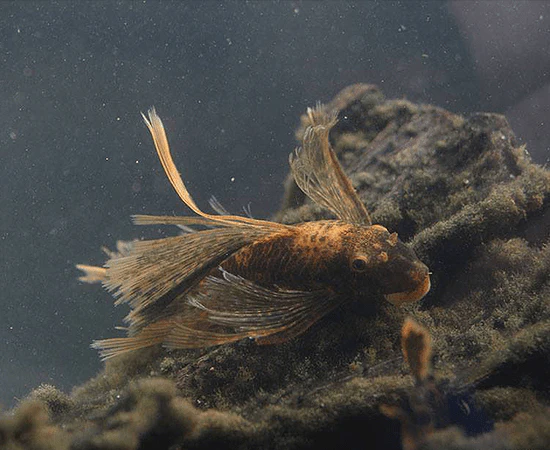
L349 Green Spotted Bushynose
Remarks: L349 green spotted bushynose are an uncommon species of Ancistrus found in Peruvian waters. They have fine, lime-green spots all over their fins, head, and body similar to the spots on a green or blue phantom pleco. This makes them look like a miniature version of these much larger Loricariids making them an excellent substitute for those with smaller tanks.
The "bushynose" part of the L349 green spotted bushynose's common name is derived from the long and elaborate tentacles that develop on the faces of males. The bigger the "beard" as some call it, the more dominant the male. Females will occasionally develop bristles as well along the edges of their face making it difficult to differentiate young males from females. These bristles and tentacles are tempting for nippy and aggressive fish so this combined with bushynose plecos not having much armor compared to other species is why they should not be housed with nippy or aggressive fish. While they are omnivores, they prefer to have a diet consisting mostly of vegetable matter and will voraciously feed on algae.
Original: $19.99
-65%$19.99
$7.00
Description
Remarks: L349 green spotted bushynose are an uncommon species of Ancistrus found in Peruvian waters. They have fine, lime-green spots all over their fins, head, and body similar to the spots on a green or blue phantom pleco. This makes them look like a miniature version of these much larger Loricariids making them an excellent substitute for those with smaller tanks.
The "bushynose" part of the L349 green spotted bushynose's common name is derived from the long and elaborate tentacles that develop on the faces of males. The bigger the "beard" as some call it, the more dominant the male. Females will occasionally develop bristles as well along the edges of their face making it difficult to differentiate young males from females. These bristles and tentacles are tempting for nippy and aggressive fish so this combined with bushynose plecos not having much armor compared to other species is why they should not be housed with nippy or aggressive fish. While they are omnivores, they prefer to have a diet consisting mostly of vegetable matter and will voraciously feed on algae.