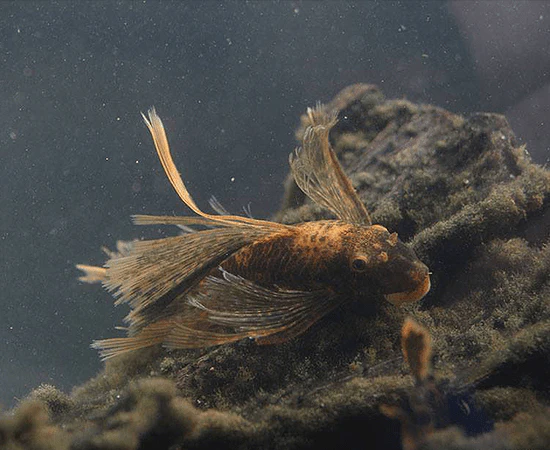
Upside-Down Catfish (Synodontis nigriventris)
- Size: A true dwarf species, reaching a maximum adult length of only 3 to 4 inches (9 to 10 cm).
- Camouflage (Countershading): Unlike most fish, its belly is darker than its back. This provides camouflage from predators looking down from above when the fish is floating inverted.
- Peaceful Demeanor: They are highly social, peaceful community fish.
- Lifespan: Typically lives for 5 to 6+ years with proper care.
- Minimum Tank Size: A minimum of 30 gallons is highly recommended to support a proper school.
- Hiding Places: They are primarily nocturnal and need plenty of cover. Provide extensive driftwood, rock caves, PVC tubes, and broad-leaved plants (like Anubias or Amazon Swords) so they can cling to the undersides.
- Substrate: Use smooth, soft sand to protect their delicate sensory barbels from damage.
- Water Flow: They prefer well-oxygenated water with a moderate to strong current.
- Temperature: 72°F to 82°F (22°C to 28°C)
- pH: 6.0 to 7.5
- Hardness: 4 to 15 dGH
- Nitrate Sensitivity: They are highly sensitive to poor water conditions, requiring efficient filtration and frequent partial water changes.
- Daily Diet: High-quality sinking catfish pellets, flake foods, and algae wafers.
- Meaty Treats: Supplement with live or frozen bloodworms, brine shrimp, and blackworms.
- Vegetables: Occasional fresh zucchini or cucumber slices.
- Feeding Time: Feed them at dusk or under dimmed lighting, as they are most active at night.
- Keep in Schools: They do best when kept in groups of at least 4 to 6 individuals. Single specimens will become extremely timid, stressed, and remain permanently hidden.
- Compatible Companions: These fish are excellent with other peaceful community fish such as tetras, rasboras, gouramis, dwarf cichlids, and peaceful bottom dwellers. However, it’s crucial to ensure they are not housed with small fish, as they may attempt to eat them if they are small.
- Warning: While peaceful, they are opportunistic predators. Avoid housing them with micro-shrimp or extremely tiny fish fry that can easily fit into their mouths.
- Handling Caution: Like all Synodontis species, they have rigid, sharp, and slightly venomous fin spines. Always use a container or a very fine-mesh net when moving them to prevent them from getting painfully entangled.
Scientific Name: Synodontis nigriventris
Common Name: Upside-Down Catfish
Max Size: 4"
pH: 7.6-8.6
Hardness: Hard
Temperature: 72-82°
Aggressiveness: Peaceful
Region of Origin: West Africa
Captive Bred or Wild: Captive Bred
Diet: Flake or pellet
Compatibility: Synodontis catfish, schooling fish 1"+.
Tank Mate Options:
- Black Neon Tetra
- Congo Tetra
- Synodontis eupterus
*****Please review our Shipping and Handling FAQ prior to placing your order. It contains important information about order fulfillment time, shipping speed, and other pertinent details.*****
Original: $9.99
-65%$9.99
$3.50


Description
- Size: A true dwarf species, reaching a maximum adult length of only 3 to 4 inches (9 to 10 cm).
- Camouflage (Countershading): Unlike most fish, its belly is darker than its back. This provides camouflage from predators looking down from above when the fish is floating inverted.
- Peaceful Demeanor: They are highly social, peaceful community fish.
- Lifespan: Typically lives for 5 to 6+ years with proper care.
- Minimum Tank Size: A minimum of 30 gallons is highly recommended to support a proper school.
- Hiding Places: They are primarily nocturnal and need plenty of cover. Provide extensive driftwood, rock caves, PVC tubes, and broad-leaved plants (like Anubias or Amazon Swords) so they can cling to the undersides.
- Substrate: Use smooth, soft sand to protect their delicate sensory barbels from damage.
- Water Flow: They prefer well-oxygenated water with a moderate to strong current.
- Temperature: 72°F to 82°F (22°C to 28°C)
- pH: 6.0 to 7.5
- Hardness: 4 to 15 dGH
- Nitrate Sensitivity: They are highly sensitive to poor water conditions, requiring efficient filtration and frequent partial water changes.
- Daily Diet: High-quality sinking catfish pellets, flake foods, and algae wafers.
- Meaty Treats: Supplement with live or frozen bloodworms, brine shrimp, and blackworms.
- Vegetables: Occasional fresh zucchini or cucumber slices.
- Feeding Time: Feed them at dusk or under dimmed lighting, as they are most active at night.
- Keep in Schools: They do best when kept in groups of at least 4 to 6 individuals. Single specimens will become extremely timid, stressed, and remain permanently hidden.
- Compatible Companions: These fish are excellent with other peaceful community fish such as tetras, rasboras, gouramis, dwarf cichlids, and peaceful bottom dwellers. However, it’s crucial to ensure they are not housed with small fish, as they may attempt to eat them if they are small.
- Warning: While peaceful, they are opportunistic predators. Avoid housing them with micro-shrimp or extremely tiny fish fry that can easily fit into their mouths.
- Handling Caution: Like all Synodontis species, they have rigid, sharp, and slightly venomous fin spines. Always use a container or a very fine-mesh net when moving them to prevent them from getting painfully entangled.
Scientific Name: Synodontis nigriventris
Common Name: Upside-Down Catfish
Max Size: 4"
pH: 7.6-8.6
Hardness: Hard
Temperature: 72-82°
Aggressiveness: Peaceful
Region of Origin: West Africa
Captive Bred or Wild: Captive Bred
Diet: Flake or pellet
Compatibility: Synodontis catfish, schooling fish 1"+.
Tank Mate Options:
- Black Neon Tetra
- Congo Tetra
- Synodontis eupterus
*****Please review our Shipping and Handling FAQ prior to placing your order. It contains important information about order fulfillment time, shipping speed, and other pertinent details.*****