Giant Oto
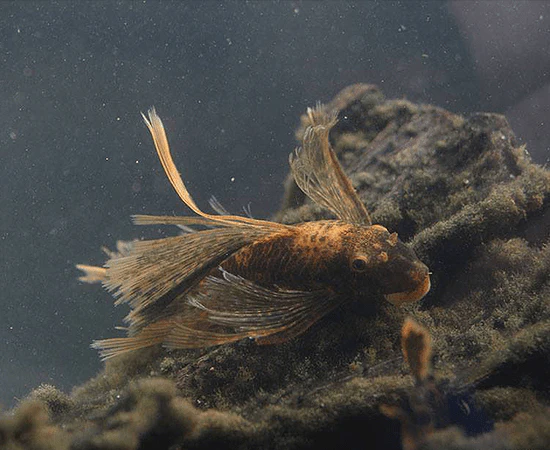
Remarks: Giant otos do not share the same genus as other oto catfish, but they have a very similar body shape. They have long, flat, pointed snouts with large eyes on the sides of their head. Their reticulated brown bodies help to camouflage them among driftwood, where they can often be found resting or feeding.
An interesting thing to note about the genus giant otos belong to, Hypoptopoma, is that all known species within the genus look extremely similar and usually the only way for most to tell the difference between them is knowing their collection point. This particular species is known from the Río Marañón near Loreto in Peru. In the wild, they can be found in large schools in areas of high flow and soft, acidic, and extremely clean water. To have the best success keeping this species in captivity, these conditions should be replicated with frequent water changes, heavy filtration, and ensuring that they are kept in groups of at least 3 or more.
While they are larger than the similar looking common oto, giant otos still should not be kept with aggressive species and should always have access to algae or biofilm to graze on. Their large size at least does make them a better fit for larger, but mostly docile species such as severums and acaras. Vegetable based foods are typically accepted but the occasional treat of fresh vegetables such as zucchini and green beans can be a good way to ensure they get all the necessary nutrients. Their voracious appetite and larger size makes them a better fit for larger systems needing a good algae-eater compared to common otos as they cover more area. Once the job is done, giant otos still make for an entertaining and interesting addition to the tank as an uncommon member of your clean-up crew.
Original: $19.99
-65%$19.99
$7.00
Description
Remarks: Giant otos do not share the same genus as other oto catfish, but they have a very similar body shape. They have long, flat, pointed snouts with large eyes on the sides of their head. Their reticulated brown bodies help to camouflage them among driftwood, where they can often be found resting or feeding.
An interesting thing to note about the genus giant otos belong to, Hypoptopoma, is that all known species within the genus look extremely similar and usually the only way for most to tell the difference between them is knowing their collection point. This particular species is known from the Río Marañón near Loreto in Peru. In the wild, they can be found in large schools in areas of high flow and soft, acidic, and extremely clean water. To have the best success keeping this species in captivity, these conditions should be replicated with frequent water changes, heavy filtration, and ensuring that they are kept in groups of at least 3 or more.
While they are larger than the similar looking common oto, giant otos still should not be kept with aggressive species and should always have access to algae or biofilm to graze on. Their large size at least does make them a better fit for larger, but mostly docile species such as severums and acaras. Vegetable based foods are typically accepted but the occasional treat of fresh vegetables such as zucchini and green beans can be a good way to ensure they get all the necessary nutrients. Their voracious appetite and larger size makes them a better fit for larger systems needing a good algae-eater compared to common otos as they cover more area. Once the job is done, giant otos still make for an entertaining and interesting addition to the tank as an uncommon member of your clean-up crew.