Golden Dwarf Cichlid (Nannacara anomala)
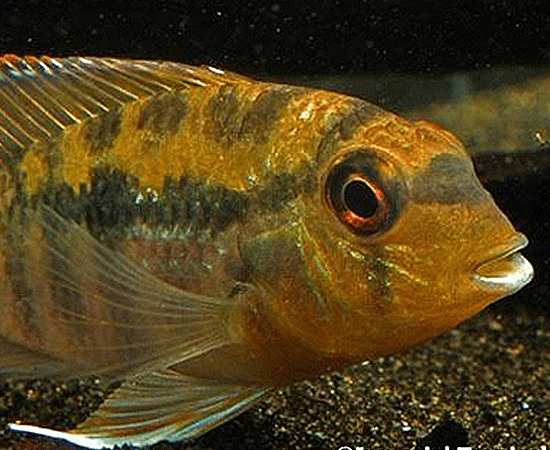
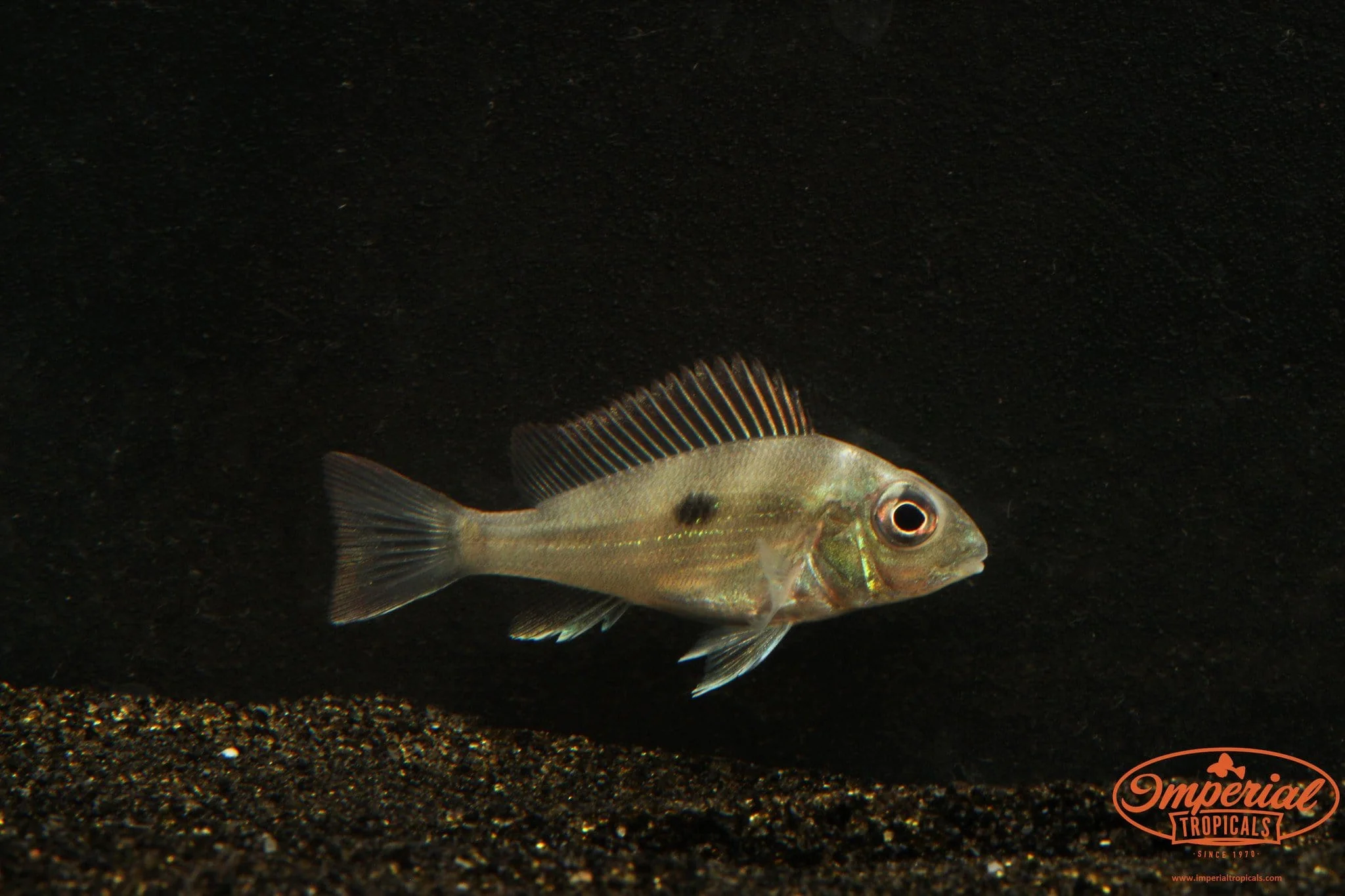
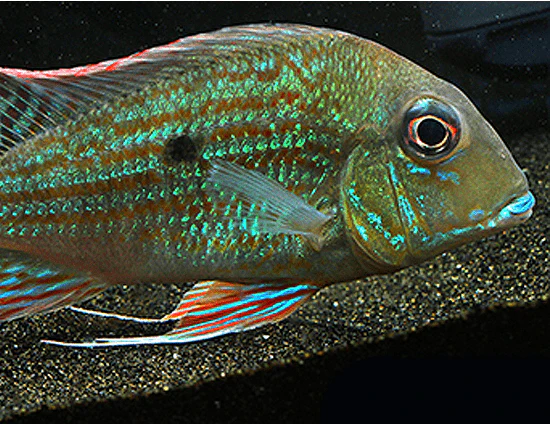
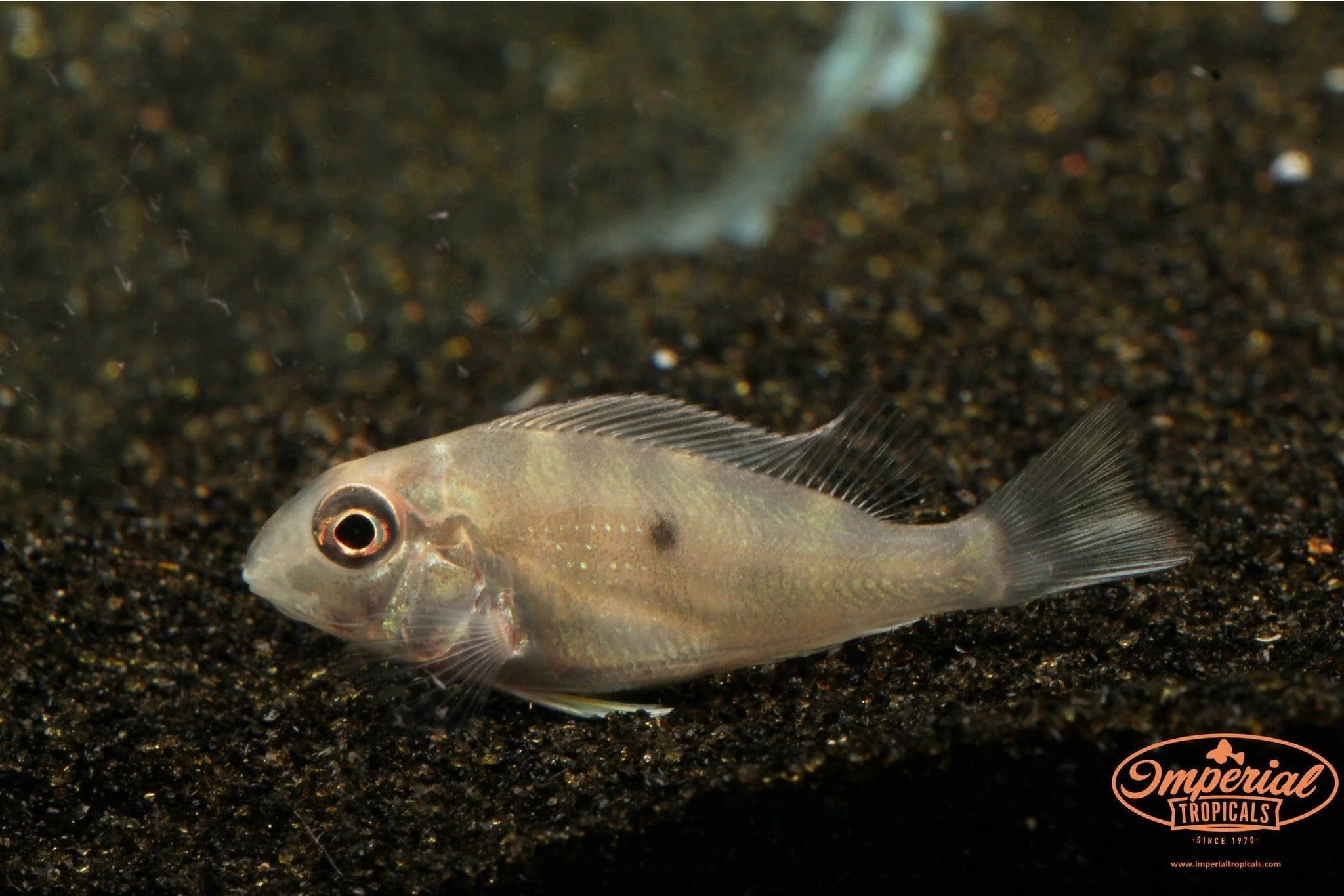
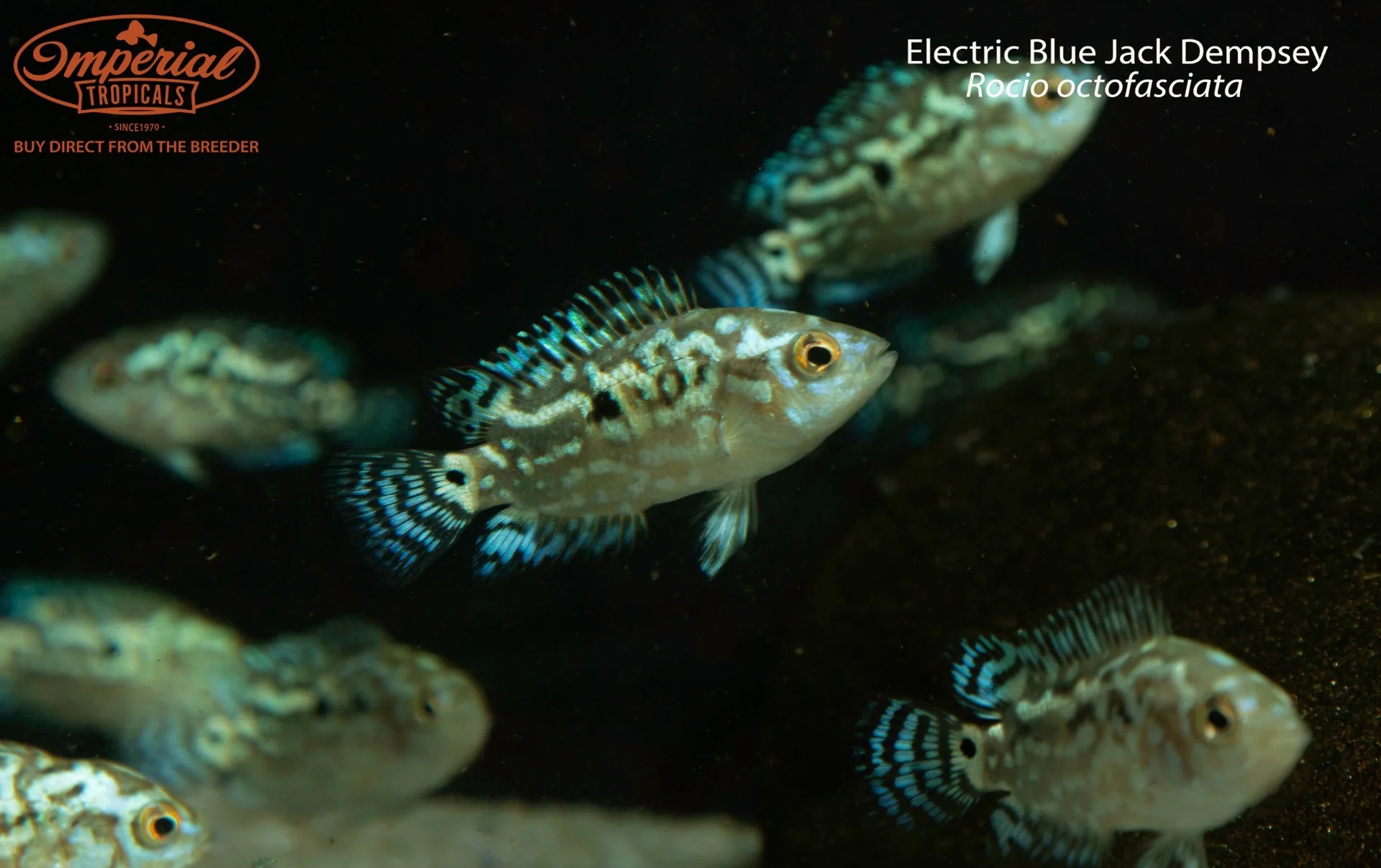
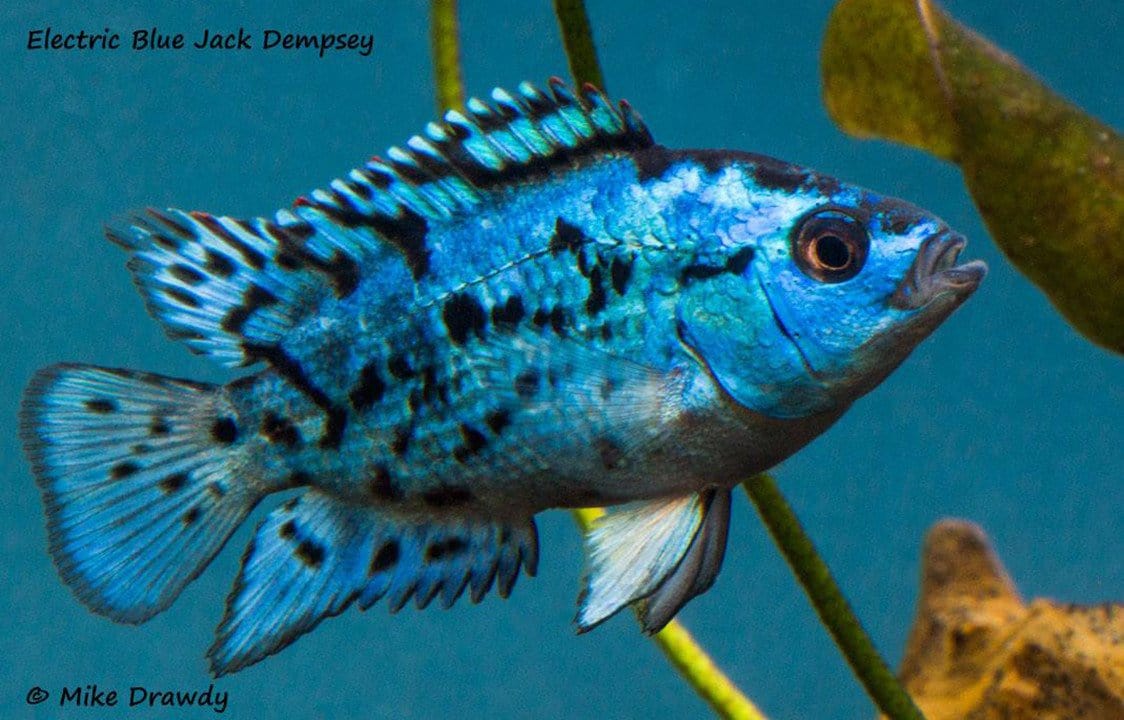
Remarks: The golden dwarf cichlid (Nannacara anomala), also known as the golden eye cichlid, is a fantastic dwarf cichlid that can be excellent for expert and beginner fish keepers alike. They are notably hardy and present some amazing color for their size. Mature males look like miniature versions of the popular electric blue acara with their own electric blue scales. Their yellow fins grow longer compared to females with their anal and dorsal fins coming to a point and accented by an orange edge along the top and bottom of the fin. Mature females are a vibrant yellow with a black stripe along their lateral line and take on a checkerboard pattern with black fins when ready to breed or guarding fry. Juveniles typically are gray or tan until they mature.
The golden dwarf cichlid will occasionally dig and sift sand for food so a substrate of soft sand is heavily recommended. The tank should also be furnished with several caves or nooks to protect and spawn in. Cichlid caves, overturned flower pots, and leaf litter work well. Live plants can provide cover as well and help these fish feel secure. As the the golden dwarf cichlid is a smaller species, they should not be kept with fish large enough to swallow them. Notably, their personalities can vary greatly between individuals with some fish being absolute terrors that take over whole tanks and nip anything they can catch, while others are timid and completely docile. Most fit into the latter category but when keeping these fish it is best to be prepared for either personality to develop.
Breeding the golden dwarf cichlid is achieved by feeding live baby brine shrimp to an adult pair and providing a proper tank setup. Fry are guarded by one or both parents for several weeks and should be fed tiny live foods such as microworms and baby brine shrimp once they are free swimming. Dither fish such as small tetras and rasboras can be used to provide parents with targets to chase to lessen the chance of them turning on each other. Pencilfish are a great option as they pose no threat to fry.
Original: $14.99
-65%$14.99
$5.25


Description
Remarks: The golden dwarf cichlid (Nannacara anomala), also known as the golden eye cichlid, is a fantastic dwarf cichlid that can be excellent for expert and beginner fish keepers alike. They are notably hardy and present some amazing color for their size. Mature males look like miniature versions of the popular electric blue acara with their own electric blue scales. Their yellow fins grow longer compared to females with their anal and dorsal fins coming to a point and accented by an orange edge along the top and bottom of the fin. Mature females are a vibrant yellow with a black stripe along their lateral line and take on a checkerboard pattern with black fins when ready to breed or guarding fry. Juveniles typically are gray or tan until they mature.
The golden dwarf cichlid will occasionally dig and sift sand for food so a substrate of soft sand is heavily recommended. The tank should also be furnished with several caves or nooks to protect and spawn in. Cichlid caves, overturned flower pots, and leaf litter work well. Live plants can provide cover as well and help these fish feel secure. As the the golden dwarf cichlid is a smaller species, they should not be kept with fish large enough to swallow them. Notably, their personalities can vary greatly between individuals with some fish being absolute terrors that take over whole tanks and nip anything they can catch, while others are timid and completely docile. Most fit into the latter category but when keeping these fish it is best to be prepared for either personality to develop.
Breeding the golden dwarf cichlid is achieved by feeding live baby brine shrimp to an adult pair and providing a proper tank setup. Fry are guarded by one or both parents for several weeks and should be fed tiny live foods such as microworms and baby brine shrimp once they are free swimming. Dither fish such as small tetras and rasboras can be used to provide parents with targets to chase to lessen the chance of them turning on each other. Pencilfish are a great option as they pose no threat to fry.