Regan's Dwarf Pike Cichlid
Scientific Name: Wallaciia regani
Common Name: Dwarf Pike
Max Size: 5"
pH: 5.0-7.0
Hardness: Soft
Temperature: 72-82°
Aggressiveness: Semi-Aggressive
Region of Origin: South America
Captive Bred or Wild: Wild
Diet: Flake or pellet
Compatibility: Dwarf cichlids, schooling fish, catfish.
Remarks: Wallaciia regani (formerly known as Crenicichla regani) is a species of dwarf pike cichlid native to the Amazon River basin in South America. It is one of the most common and widespread members of the Wallaciia genus, which was officially erected in 2023 to house the dwarf species formerly classified within the Crenicichla wallacii species complex.
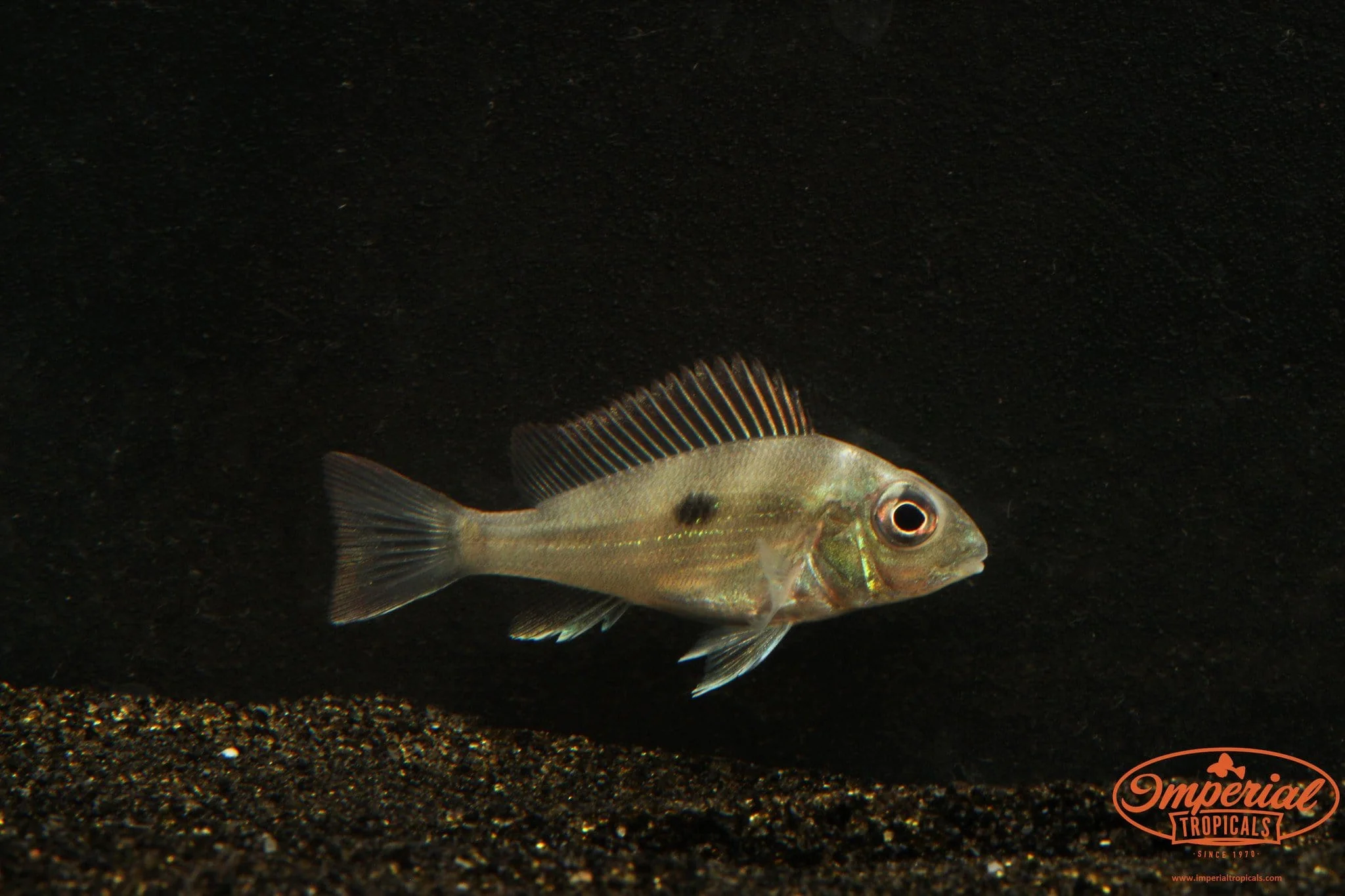
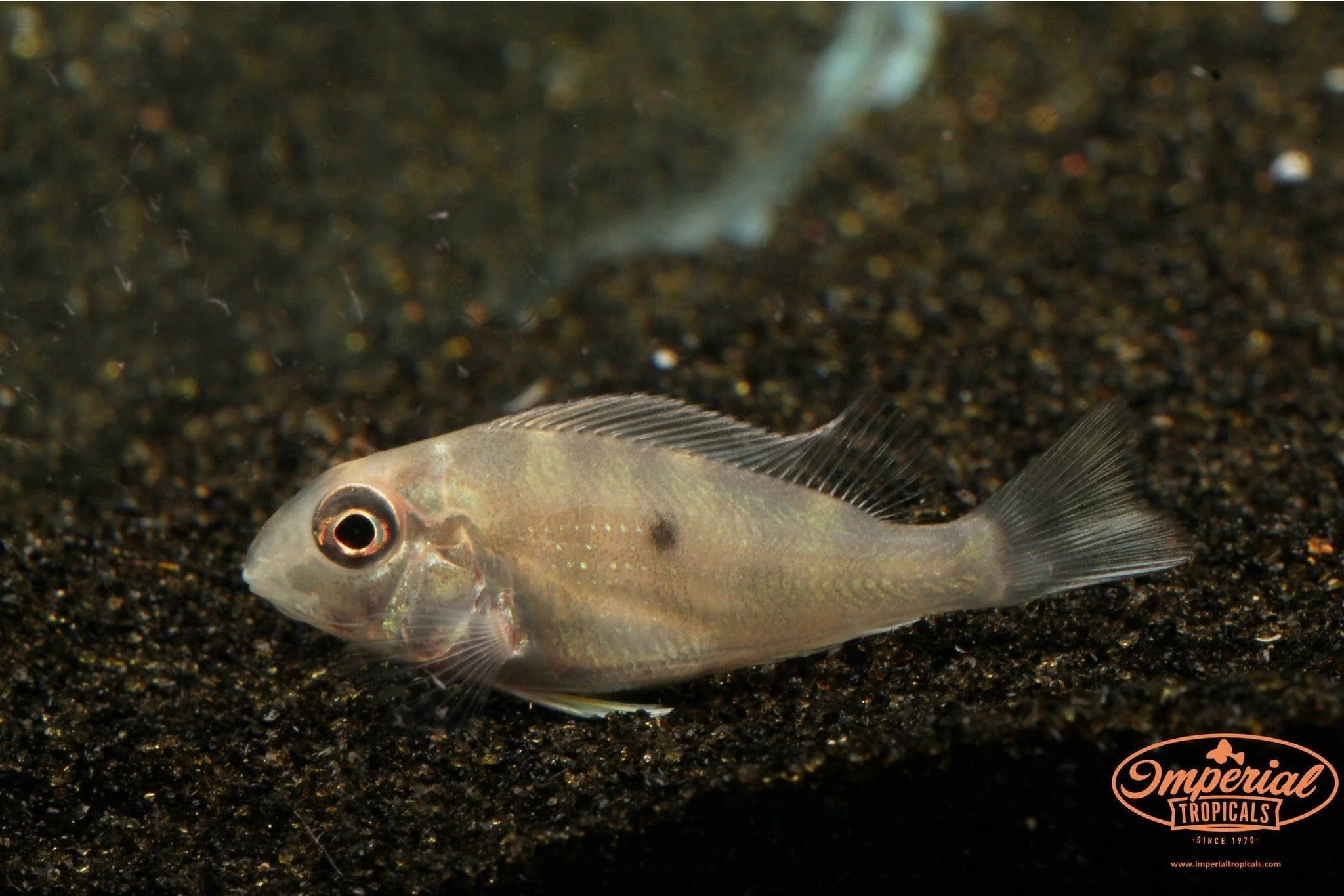
Physical Characteristics: This is one of the smallest pike cichlids, typically reaching a maximum length of about 7.9 cm (3.1 in).
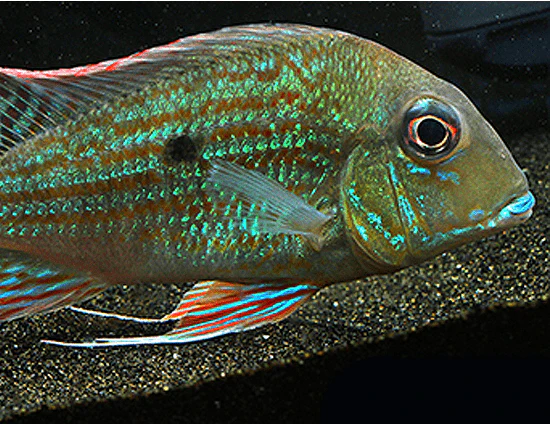
They have an elongated, "pike-like" body shape. Females often exhibit distinctive black ocelli (eye-spots) rimmed with white on their dorsal fin, which helps distinguish them from similar species like W. notophthalmus.
Because they are found throughout Central Amazonia, their appearance can vary significantly by location, leading some researchers to believe W. regani may actually be a complex of several very similar species.
Distribution: Found primarily in the Amazon River basin and the Trombetas River in Brazil.
They prefer the calmer waters of small tributaries, often in areas thick with leaf litter and submerged roots.
In the wild, they typically inhabit soft, acidic water with a pH range around 6.0 to 7.2 and temperatures between 24°C and 27°C (75°F–81°F).
Classified as Least Concern by the IUCN Red List.
Aquarium Care
Tank Size: A minimum of 30 gallons is generally recommended.
Temperament: While "peaceful" compared to larger pike cichlids, they are still territorial and predatory. They may eat smaller tankmates like shrimp or nano-fish but generally ignore larger, non-aggressive fish.
Setup: Provide plenty of hiding places using driftwood, rocks, and caves to help them establish territories.
Diet: As micropredators, they thrive on live or frozen foods such as bloodworms and krill, though some can be transitioned to high-quality dry foods.
Tank Mate Options:
- Platinum Angelfish
- Keyhole Cichlid
- L333 Porto de Moz
Original: $29.99
-65%$29.99
$10.50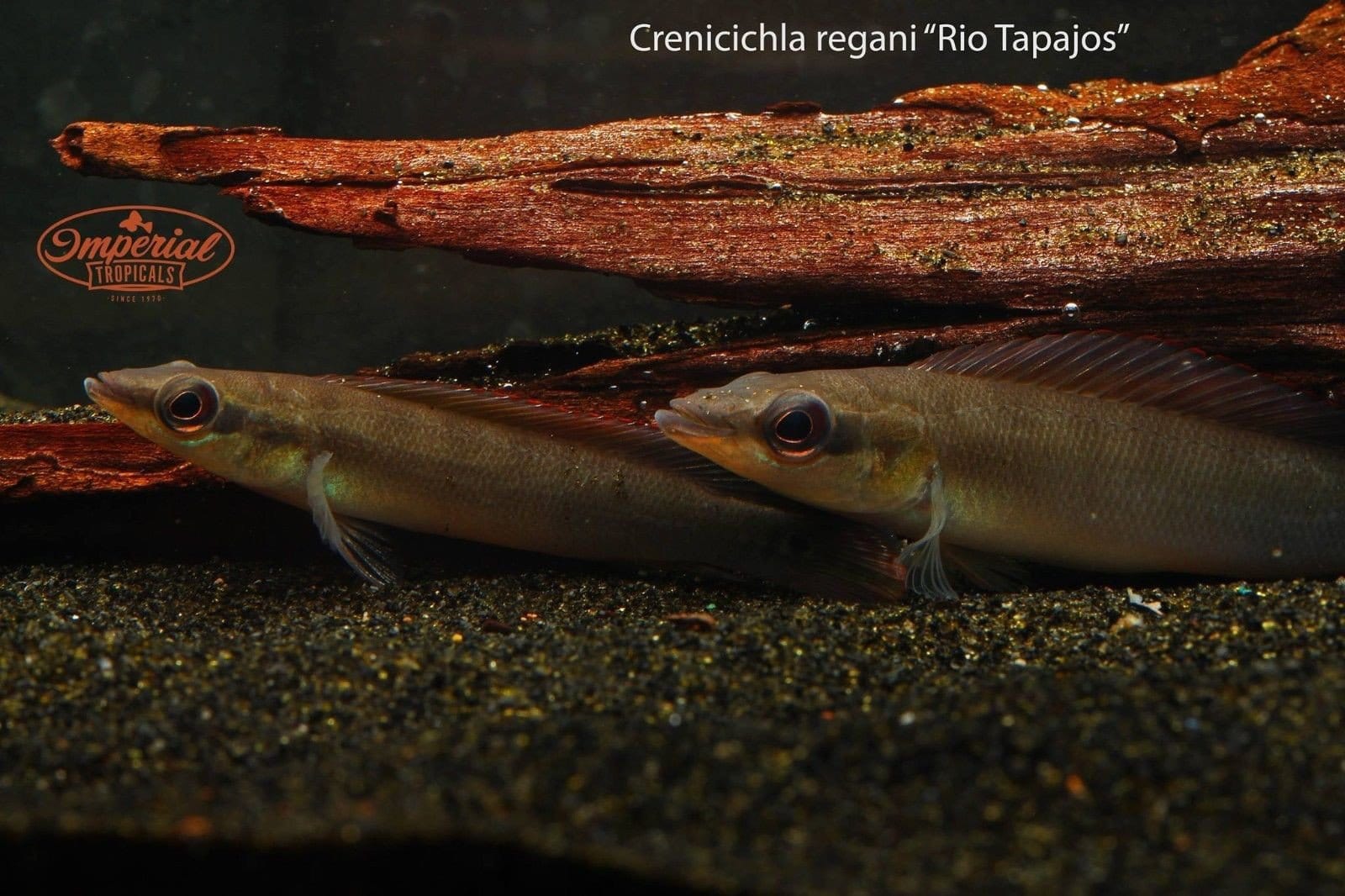
Description
Scientific Name: Wallaciia regani
Common Name: Dwarf Pike
Max Size: 5"
pH: 5.0-7.0
Hardness: Soft
Temperature: 72-82°
Aggressiveness: Semi-Aggressive
Region of Origin: South America
Captive Bred or Wild: Wild
Diet: Flake or pellet
Compatibility: Dwarf cichlids, schooling fish, catfish.
Remarks: Wallaciia regani (formerly known as Crenicichla regani) is a species of dwarf pike cichlid native to the Amazon River basin in South America. It is one of the most common and widespread members of the Wallaciia genus, which was officially erected in 2023 to house the dwarf species formerly classified within the Crenicichla wallacii species complex.
Physical Characteristics: This is one of the smallest pike cichlids, typically reaching a maximum length of about 7.9 cm (3.1 in).
They have an elongated, "pike-like" body shape. Females often exhibit distinctive black ocelli (eye-spots) rimmed with white on their dorsal fin, which helps distinguish them from similar species like W. notophthalmus.
Because they are found throughout Central Amazonia, their appearance can vary significantly by location, leading some researchers to believe W. regani may actually be a complex of several very similar species.
Distribution: Found primarily in the Amazon River basin and the Trombetas River in Brazil.
They prefer the calmer waters of small tributaries, often in areas thick with leaf litter and submerged roots.
In the wild, they typically inhabit soft, acidic water with a pH range around 6.0 to 7.2 and temperatures between 24°C and 27°C (75°F–81°F).
Classified as Least Concern by the IUCN Red List.
Aquarium Care
Tank Size: A minimum of 30 gallons is generally recommended.
Temperament: While "peaceful" compared to larger pike cichlids, they are still territorial and predatory. They may eat smaller tankmates like shrimp or nano-fish but generally ignore larger, non-aggressive fish.
Setup: Provide plenty of hiding places using driftwood, rocks, and caves to help them establish territories.
Diet: As micropredators, they thrive on live or frozen foods such as bloodworms and krill, though some can be transitioned to high-quality dry foods.
Tank Mate Options:
- Platinum Angelfish
- Keyhole Cichlid
- L333 Porto de Moz