Colombian Ram
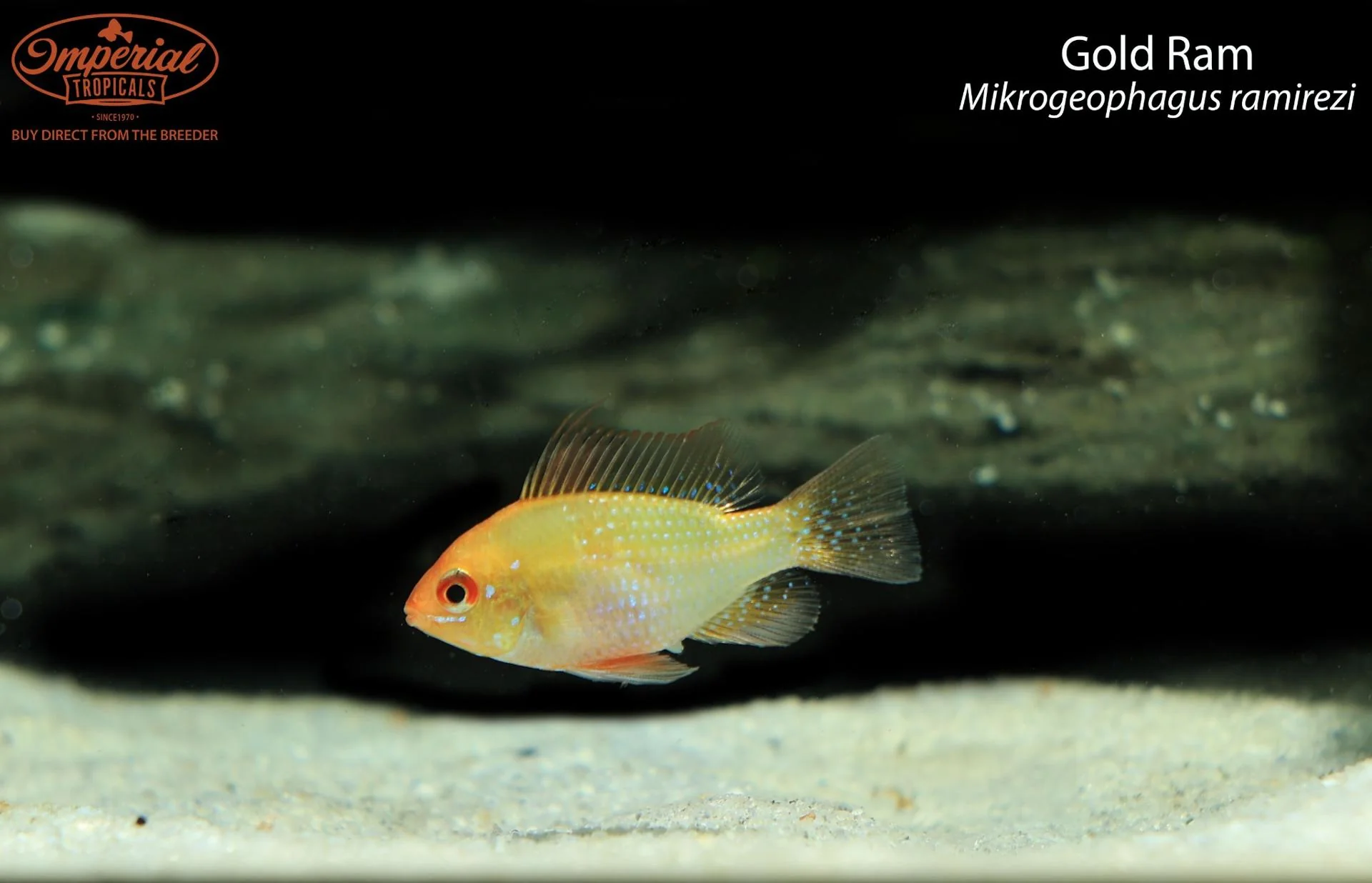
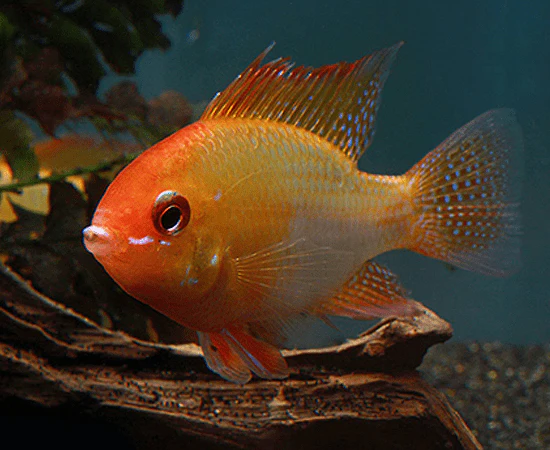
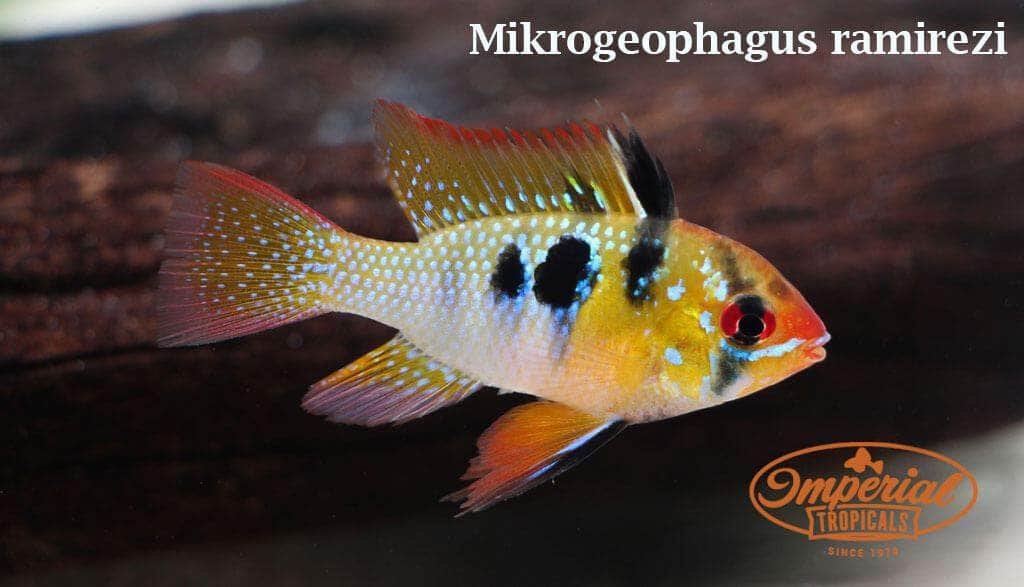
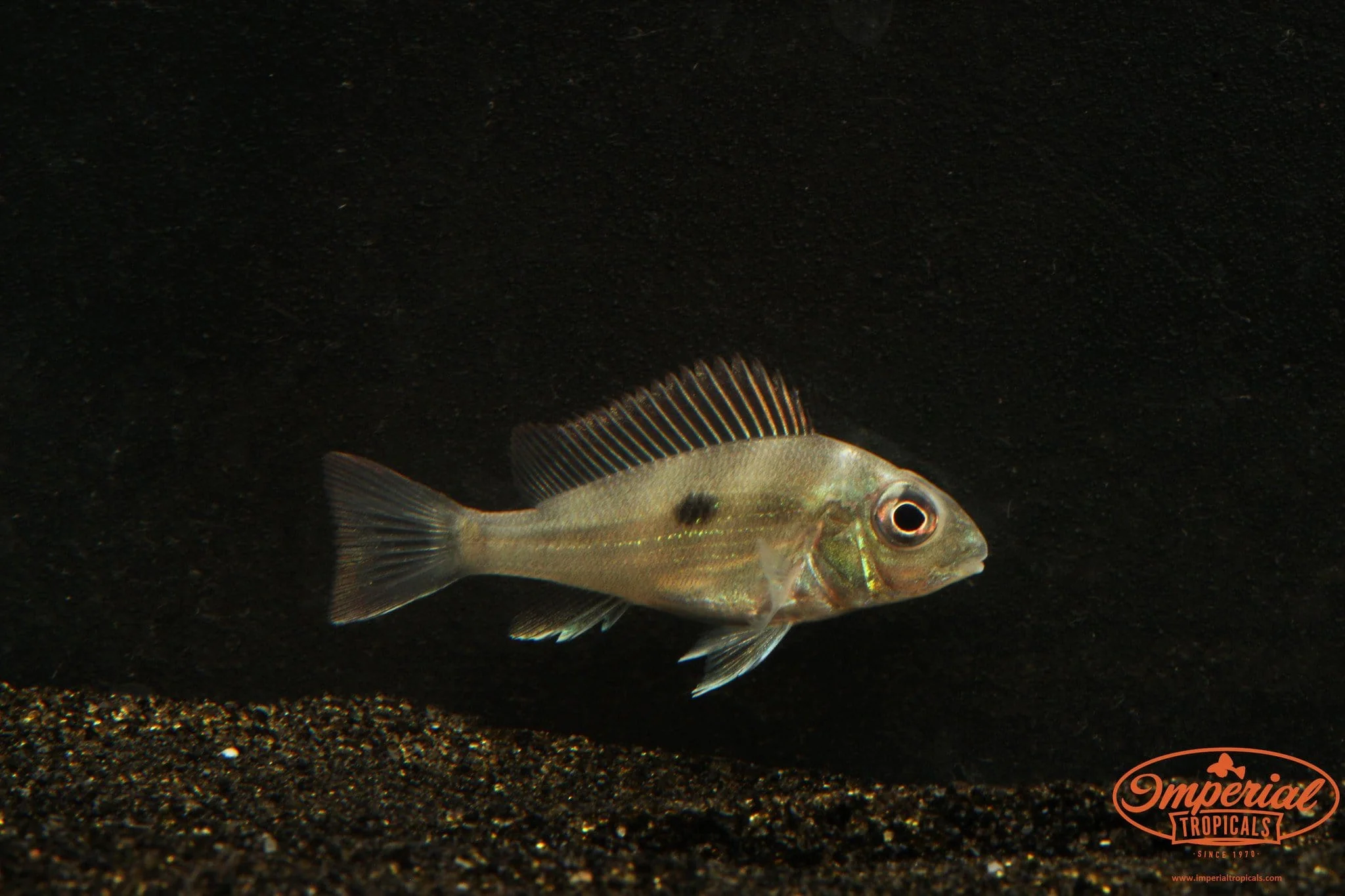
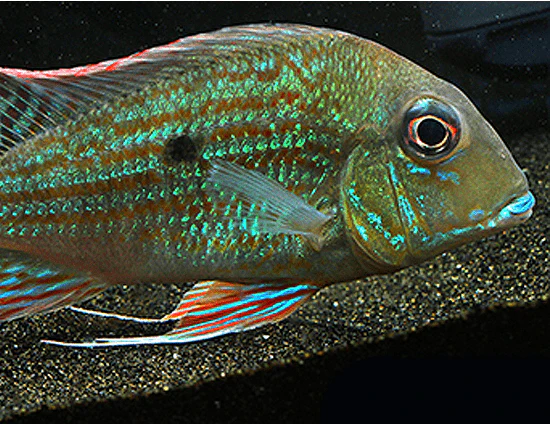
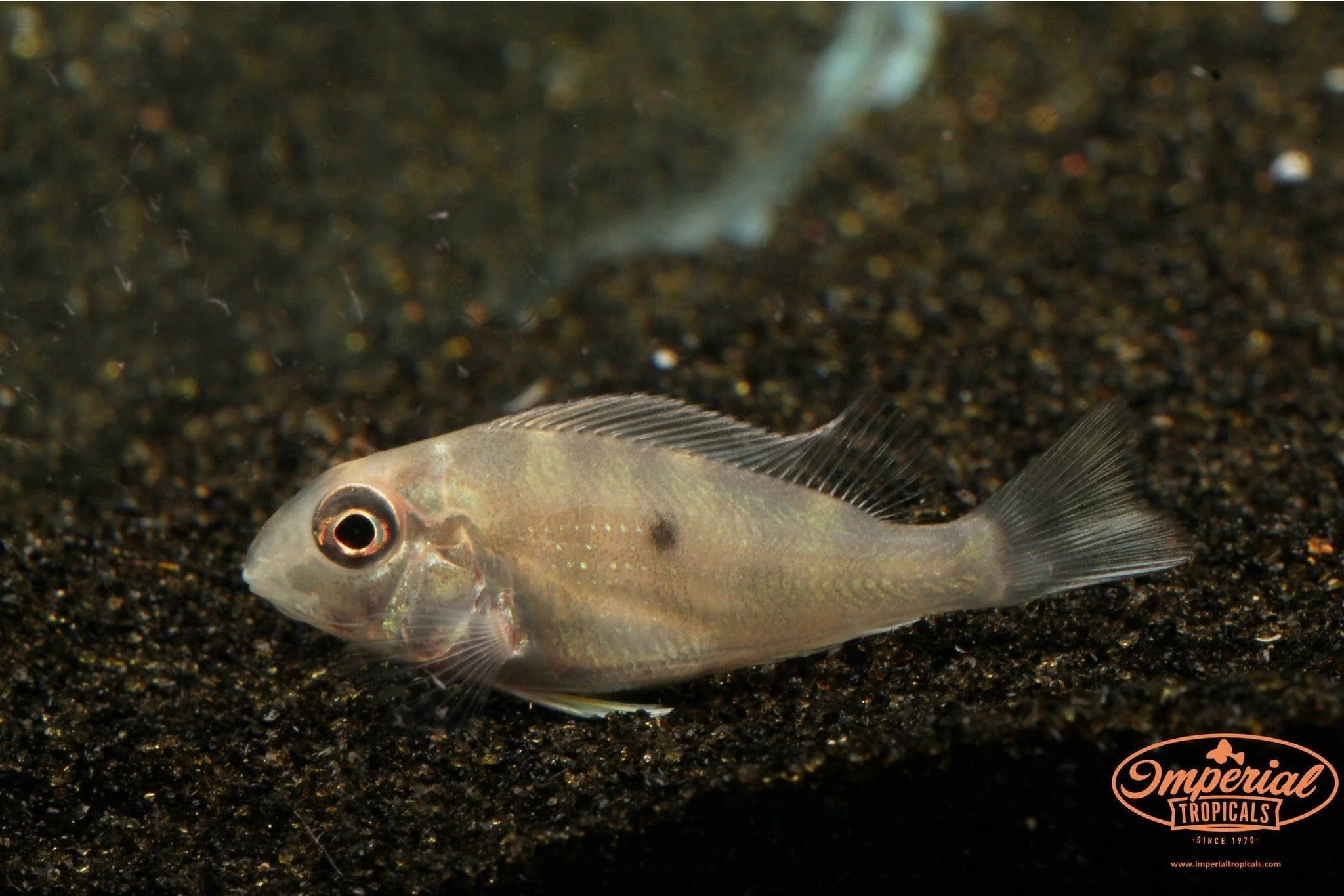
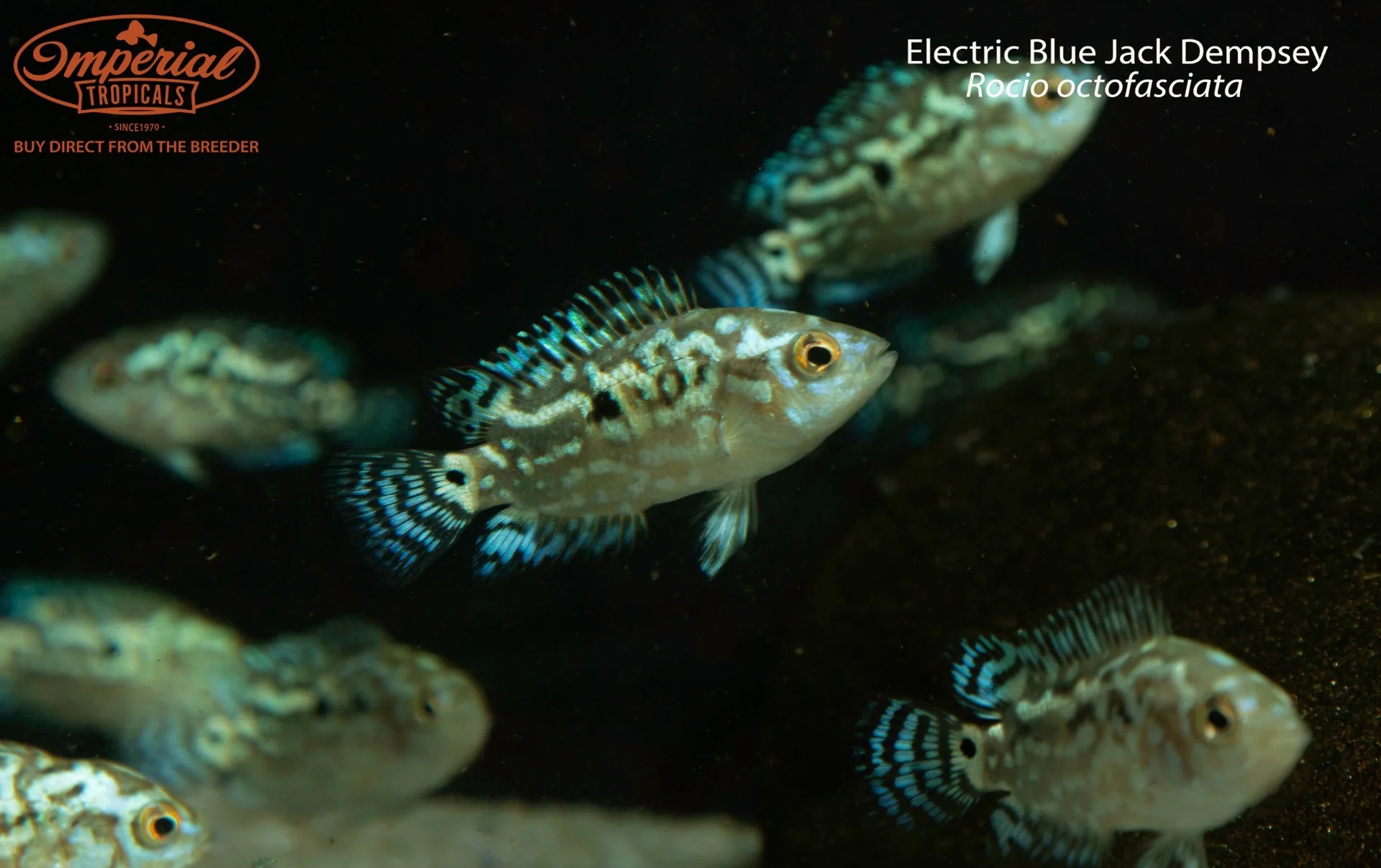
Remarks: These rams are the wild form of the German blue Ram from Colombia. They display a lot more yellow coloration and a bit less blue than the line-bred varieties most are used to seeing in the hobby. As these are wild fish, their genetics are much healthier than German blue rams making them a great addition to a breeding project for some fresh genes. They also can be perfect for anyone looking for a more natural look and representation of a South American biotope.
Rams have been popular in the hobby for decades for their brilliant colors and easy reproduction. They are small cichlids from South America that rarely grow larger than 2". Their name, "Small Eartheater," gives clues about their feeding mechanism: They sift sand through their mouths and gills, swallowing small bits of food. As such, sand is necessary for the long-term health of these fish. They require water warmer than most other fish, so it is advised to keep the water no colder than 80° F. There are many different methods hobbyists use to tell males from female, such as looking for a pink belly when looking for females, we have found to most accurate way to sex these fish is to look at the large black eye spot just behind their gill plate. Females will have bright blue scales inside the spot, while males will only have these scales surrounding the outside of the spot.
Reproduction is achieved when a pair decides upon a suitable cave or flat surface. They may excavate small craters in the sand to use as a spawning site - something that is very fun to watch! Eggs are laid and guarded by the parents until they are free-swimming, at which time the parents will shepherd the fry around the tank, eating small bits of food stuck to tank décor. Dither fish such as small tetras will give the parents something to target with their aggression, hopefully saving themselves from each other as their protective behavior can result in fights. Spawning is more likely to occur if the rams are fed plenty of small, live foods such as baby brine shrimp and if they are kept between 82° F and 84° F.
Original: $11.99
-65%$11.99
$4.20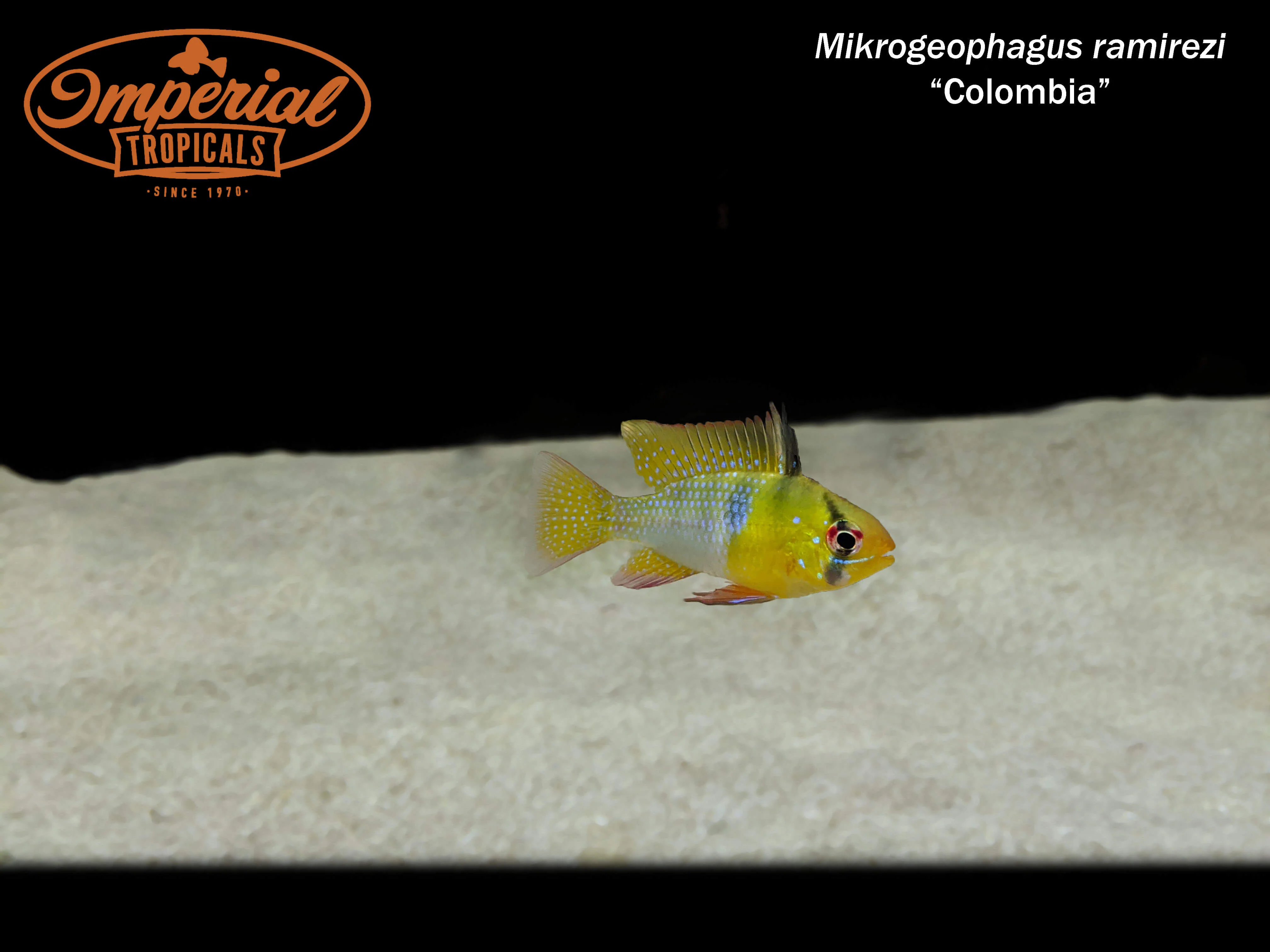


Description
Remarks: These rams are the wild form of the German blue Ram from Colombia. They display a lot more yellow coloration and a bit less blue than the line-bred varieties most are used to seeing in the hobby. As these are wild fish, their genetics are much healthier than German blue rams making them a great addition to a breeding project for some fresh genes. They also can be perfect for anyone looking for a more natural look and representation of a South American biotope.
Rams have been popular in the hobby for decades for their brilliant colors and easy reproduction. They are small cichlids from South America that rarely grow larger than 2". Their name, "Small Eartheater," gives clues about their feeding mechanism: They sift sand through their mouths and gills, swallowing small bits of food. As such, sand is necessary for the long-term health of these fish. They require water warmer than most other fish, so it is advised to keep the water no colder than 80° F. There are many different methods hobbyists use to tell males from female, such as looking for a pink belly when looking for females, we have found to most accurate way to sex these fish is to look at the large black eye spot just behind their gill plate. Females will have bright blue scales inside the spot, while males will only have these scales surrounding the outside of the spot.
Reproduction is achieved when a pair decides upon a suitable cave or flat surface. They may excavate small craters in the sand to use as a spawning site - something that is very fun to watch! Eggs are laid and guarded by the parents until they are free-swimming, at which time the parents will shepherd the fry around the tank, eating small bits of food stuck to tank décor. Dither fish such as small tetras will give the parents something to target with their aggression, hopefully saving themselves from each other as their protective behavior can result in fights. Spawning is more likely to occur if the rams are fed plenty of small, live foods such as baby brine shrimp and if they are kept between 82° F and 84° F.