Blue Bandit Cichlid (Guianacara owroewefi)
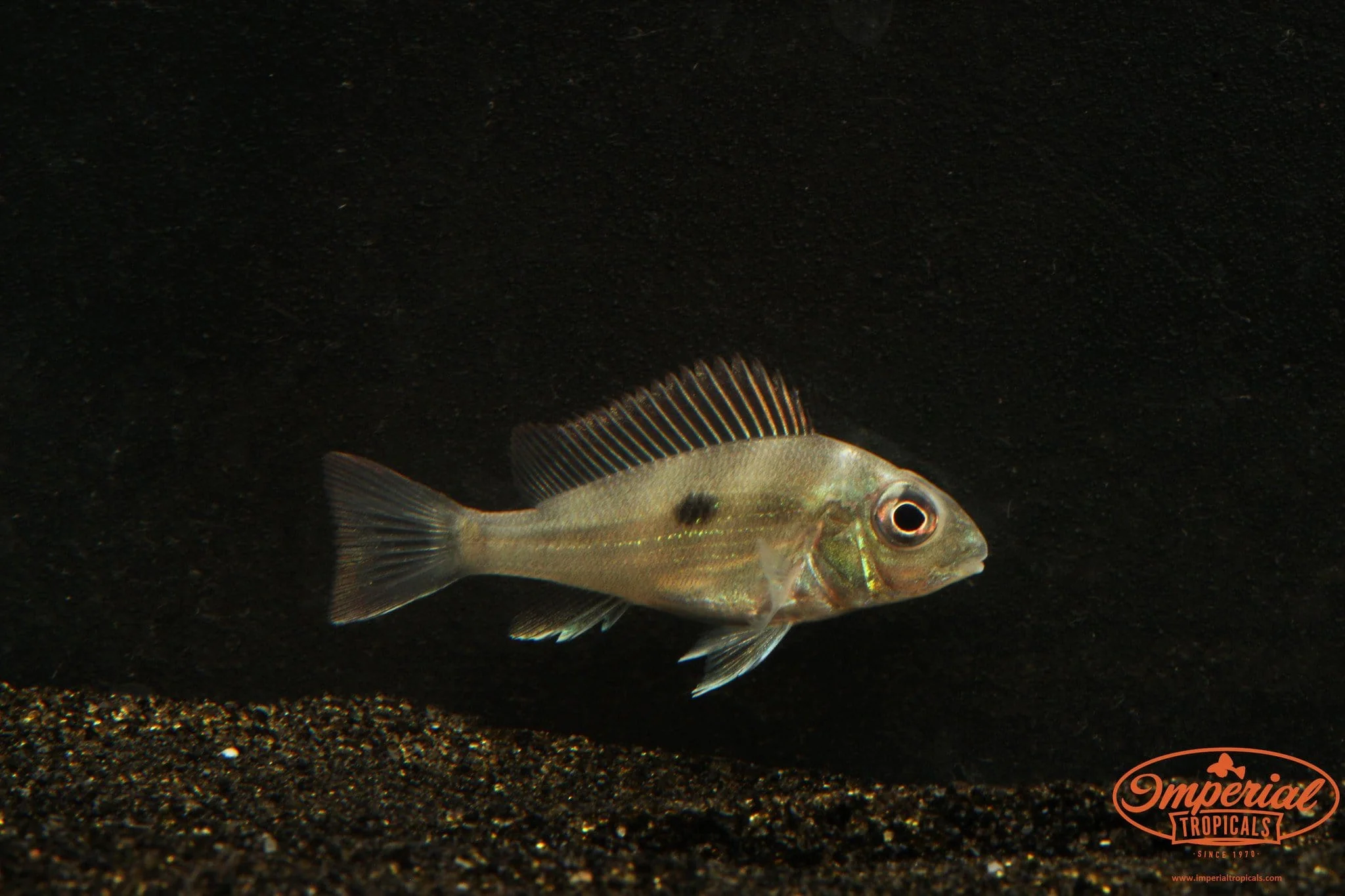
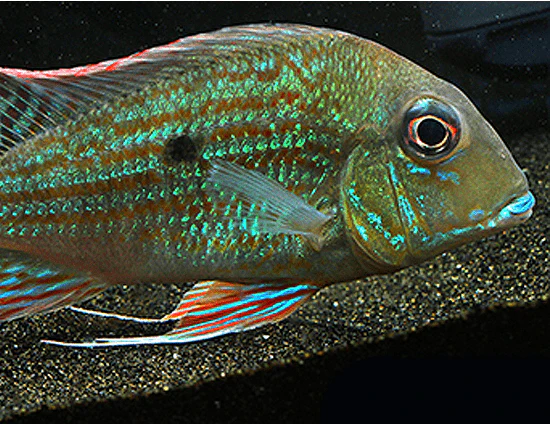
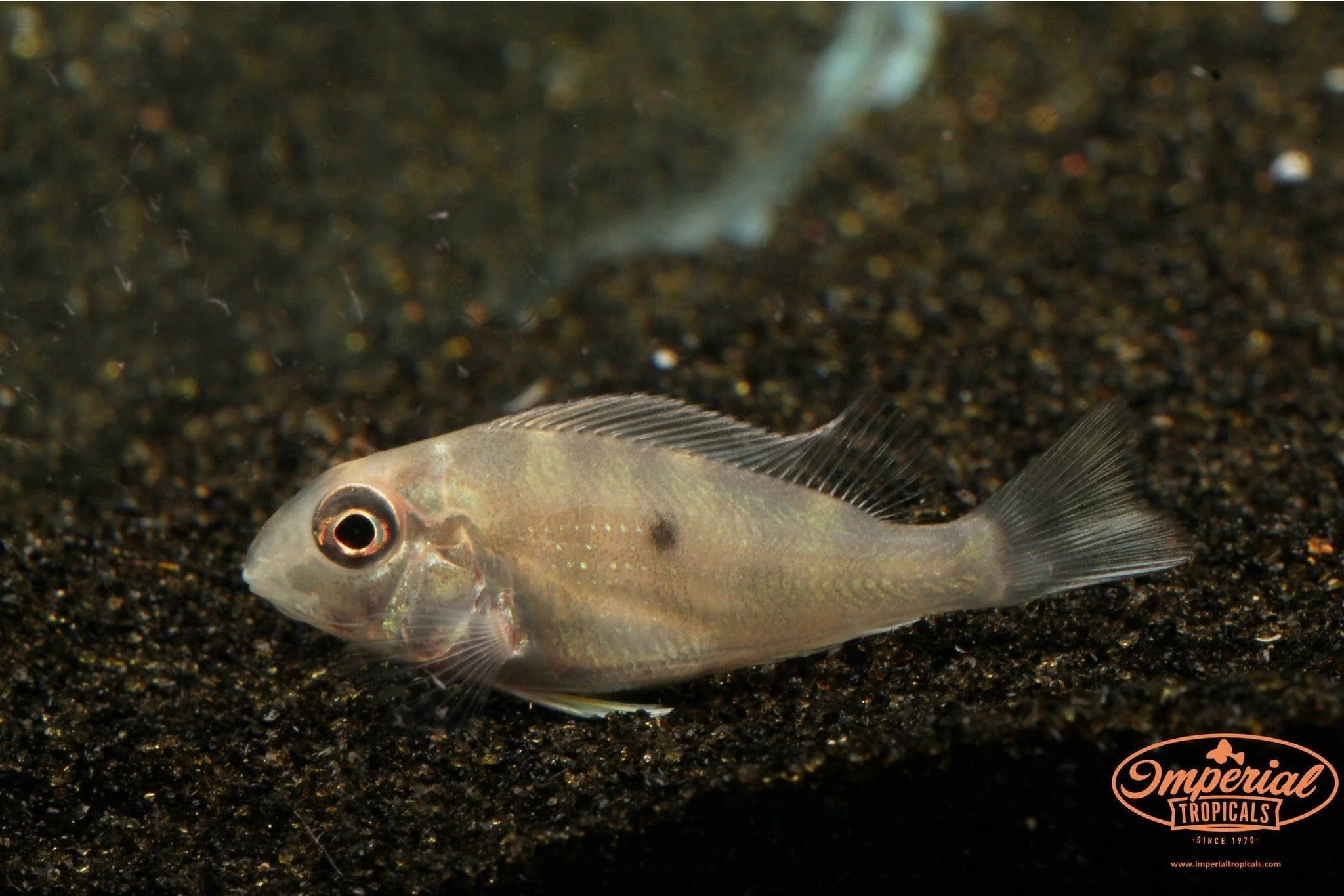
Remarks: The blue bandit cichlid (Guianacara owroewefi) is one of the six described species of bandit cichlid. Like other bandit cichlids, their bodies are typically tan or silver in color with the fins sometimes taking on a yellow or blue hue and the face sometimes turning yellow when in breeding dress. The blue bandit cichlid is said to be a species that is most likely to show more of this blue coloration. This species is being bred in captivity more frequently resulting in those typically available to hobbyists being more hardy compared to wild specimens.
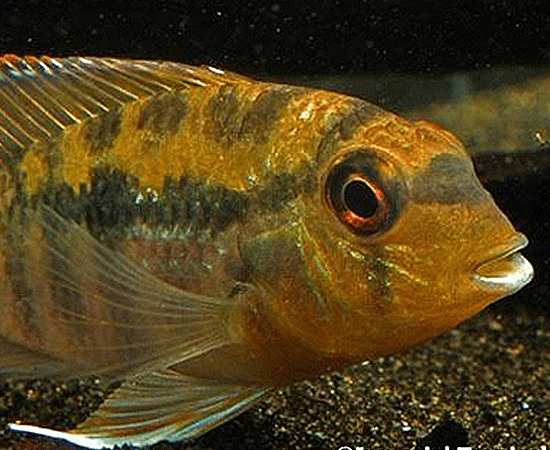
The different species of bandit cichlids are usually told apart by looking to the black markings on the fins, head, and body. The blue bandit cichlid presents the typical black mask, but it comes to more of a point at the bottom and the black wedge-shaped spot on the flanks is very wide but not very saturated so it can sometimes appear gray. The black spot within the wedge and below the lateral line is typically visible and is fairly large compared to the same marking in other species. Along with these markings, the very front of the dorsal fin will also have a black spot.
Care for any kind of bandit cichlid is the same. While most are fairly hardy and adaptable, they do best when kept in soft, warm, and somewhat acidic conditions. A sandy substrate is appreciated as they will engage in sand-sifting behavior, keeping them on a coarse sand or gravel substrate can result in choking or damage to the mouth and gills. Driftwood and leaf litter will help keep the pH down and provide hiding spots for the bandit cichlid. Plants typically are not recommended as they will nibble them and uproot them as they rearrange the decor within the tank. Terracotta pots can be great hiding spots and can even encourage breeding behavior as bandit cichlids are cave spawners.
As they are a medium-sized cichlid, a 40 gallon tank can be sufficient for a small pair of bandit cichlids. However, despite their not terribly aggressive demeanor, a much larger tank of 75-90 gallons or more is recommended if wanting to keep these fish in a community setting. Bandit cichlids can become territorial, especially when spawning, so plenty of space and breaks in line of sight are needed to help keep the peace. There is also a danger of them eating any fish they are kept with that can fit in their mouths. If all these aspects are taken into consideration, the bandit cichlid can be an excellent addition to many aquariums.
Original: $24.99
-65%$24.99
$8.75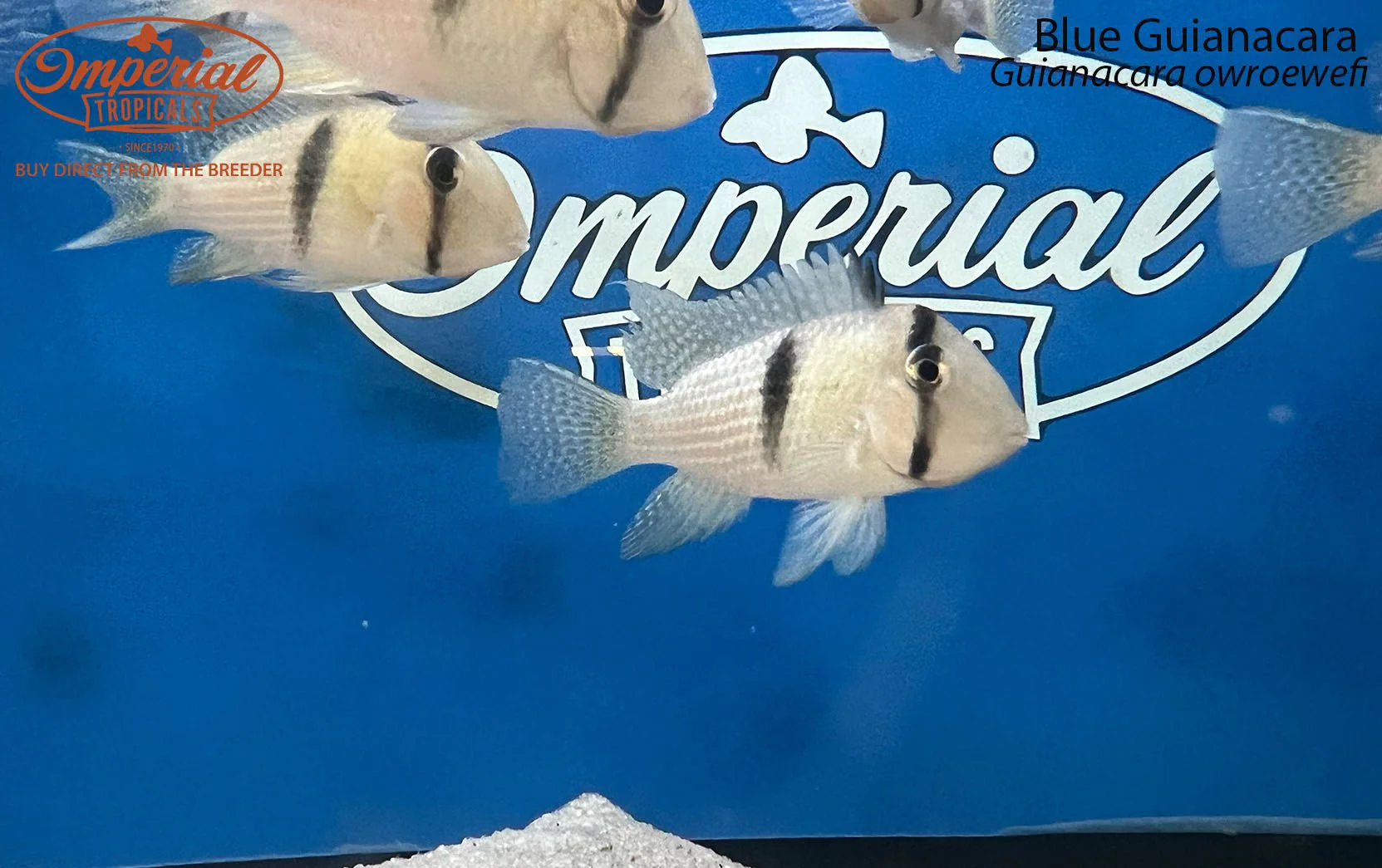
Description
Remarks: The blue bandit cichlid (Guianacara owroewefi) is one of the six described species of bandit cichlid. Like other bandit cichlids, their bodies are typically tan or silver in color with the fins sometimes taking on a yellow or blue hue and the face sometimes turning yellow when in breeding dress. The blue bandit cichlid is said to be a species that is most likely to show more of this blue coloration. This species is being bred in captivity more frequently resulting in those typically available to hobbyists being more hardy compared to wild specimens.
The different species of bandit cichlids are usually told apart by looking to the black markings on the fins, head, and body. The blue bandit cichlid presents the typical black mask, but it comes to more of a point at the bottom and the black wedge-shaped spot on the flanks is very wide but not very saturated so it can sometimes appear gray. The black spot within the wedge and below the lateral line is typically visible and is fairly large compared to the same marking in other species. Along with these markings, the very front of the dorsal fin will also have a black spot.
Care for any kind of bandit cichlid is the same. While most are fairly hardy and adaptable, they do best when kept in soft, warm, and somewhat acidic conditions. A sandy substrate is appreciated as they will engage in sand-sifting behavior, keeping them on a coarse sand or gravel substrate can result in choking or damage to the mouth and gills. Driftwood and leaf litter will help keep the pH down and provide hiding spots for the bandit cichlid. Plants typically are not recommended as they will nibble them and uproot them as they rearrange the decor within the tank. Terracotta pots can be great hiding spots and can even encourage breeding behavior as bandit cichlids are cave spawners.
As they are a medium-sized cichlid, a 40 gallon tank can be sufficient for a small pair of bandit cichlids. However, despite their not terribly aggressive demeanor, a much larger tank of 75-90 gallons or more is recommended if wanting to keep these fish in a community setting. Bandit cichlids can become territorial, especially when spawning, so plenty of space and breaks in line of sight are needed to help keep the peace. There is also a danger of them eating any fish they are kept with that can fit in their mouths. If all these aspects are taken into consideration, the bandit cichlid can be an excellent addition to many aquariums.