Triple Red Cockatoo Apisto
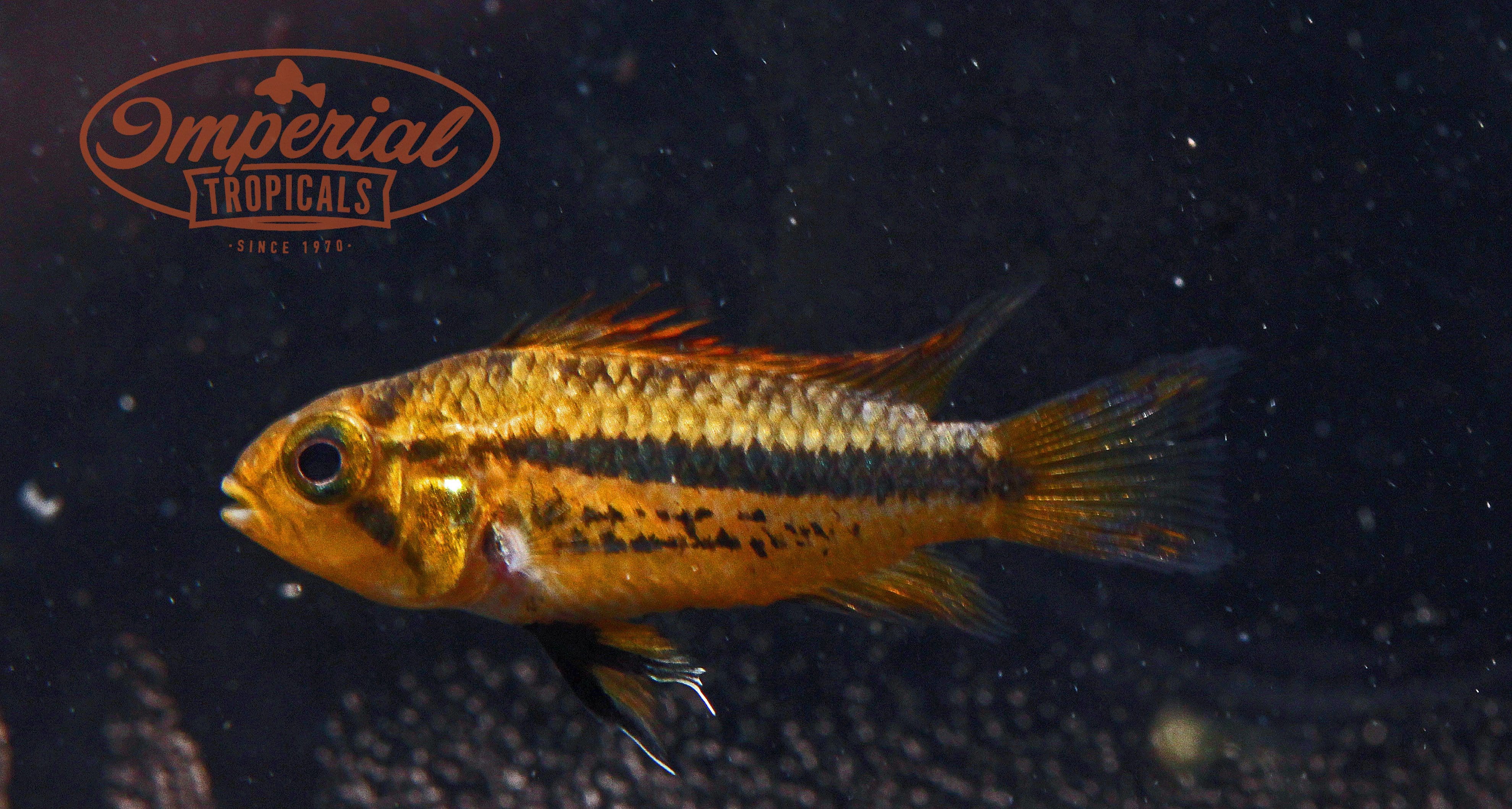
We currently offer a cheaper B-grade option for these fish. B-grade Triple Red Cockatoo Apistos are ones that do not have full red coloration in all 3 sets of fins. These can have a single, double, or a double with an incomplete third set of red fins.
Remarks: Apistogramma cacatuoides is one of the most popular Apistogramma species. Wild populations have subtle blue and yellow colors with a few orange spots on the caudal fin, but captive strains have been selected for the orange spots, resulting in the Triple Red and many other varieties. Males are larger and have more color, as well as longer and more elaborate fins. Females will turn bright yellow with black fins when in breeding dress. Apistogramma cacatuoides is a larger species of Apistogramma and will work well as a pair in a 20 gallon tank. A sandy substrate is necessary due to their earth-eating habits. The tank should be furnished with several caves or nooks to protect and spawn in. Cichlid caves, overturned flower pots, and leaf litter work well.
Breeding is achieved by feeding live baby brine shrimp to an adult pair and providing a proper tank setup. Fry are guarded by one or both parents for several weeks. Dither fish such as small tetras and livebearers can be used to provide parents with targets to chase.
Scientific Name: Apistogramma cacatuoides
Common Name: Triple Red Cockatoo Apisto
Max Size: 2.5"
pH: 5.0-7.5
Hardness: Soft
Temperature: 70-82°
Aggressiveness: Peaceful
Region of Origin: South America
Captive Bred or Wild: Captive Bred
Diet: Small flake or pellet, small frozen or live foods
Compatibility: Schooling fish, plecos, small catfish, livebearers, rainbowfish.
Tank Mate Options:
- Cardinal Tetra
- Super Red Bushynose Pleco
- Phoenix Tetra
Original: $9.99
-65%$9.99
$3.50

Description
We currently offer a cheaper B-grade option for these fish. B-grade Triple Red Cockatoo Apistos are ones that do not have full red coloration in all 3 sets of fins. These can have a single, double, or a double with an incomplete third set of red fins.
Remarks: Apistogramma cacatuoides is one of the most popular Apistogramma species. Wild populations have subtle blue and yellow colors with a few orange spots on the caudal fin, but captive strains have been selected for the orange spots, resulting in the Triple Red and many other varieties. Males are larger and have more color, as well as longer and more elaborate fins. Females will turn bright yellow with black fins when in breeding dress. Apistogramma cacatuoides is a larger species of Apistogramma and will work well as a pair in a 20 gallon tank. A sandy substrate is necessary due to their earth-eating habits. The tank should be furnished with several caves or nooks to protect and spawn in. Cichlid caves, overturned flower pots, and leaf litter work well.
Breeding is achieved by feeding live baby brine shrimp to an adult pair and providing a proper tank setup. Fry are guarded by one or both parents for several weeks. Dither fish such as small tetras and livebearers can be used to provide parents with targets to chase.
Scientific Name: Apistogramma cacatuoides
Common Name: Triple Red Cockatoo Apisto
Max Size: 2.5"
pH: 5.0-7.5
Hardness: Soft
Temperature: 70-82°
Aggressiveness: Peaceful
Region of Origin: South America
Captive Bred or Wild: Captive Bred
Diet: Small flake or pellet, small frozen or live foods
Compatibility: Schooling fish, plecos, small catfish, livebearers, rainbowfish.
Tank Mate Options:
- Cardinal Tetra
- Super Red Bushynose Pleco
- Phoenix Tetra